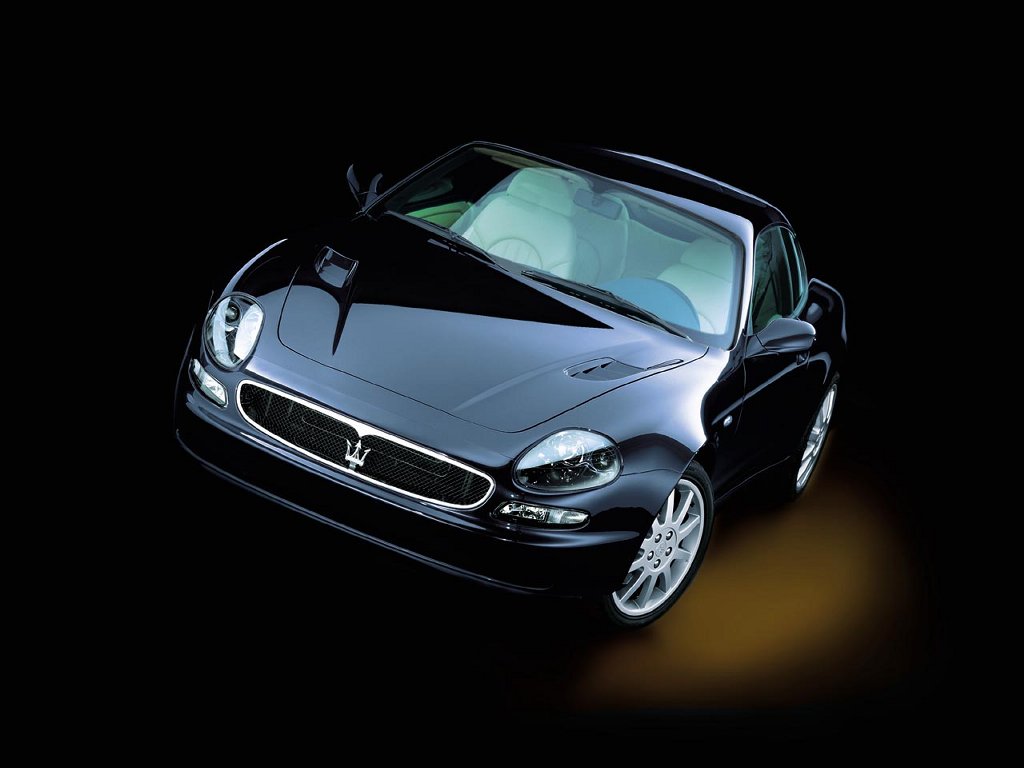
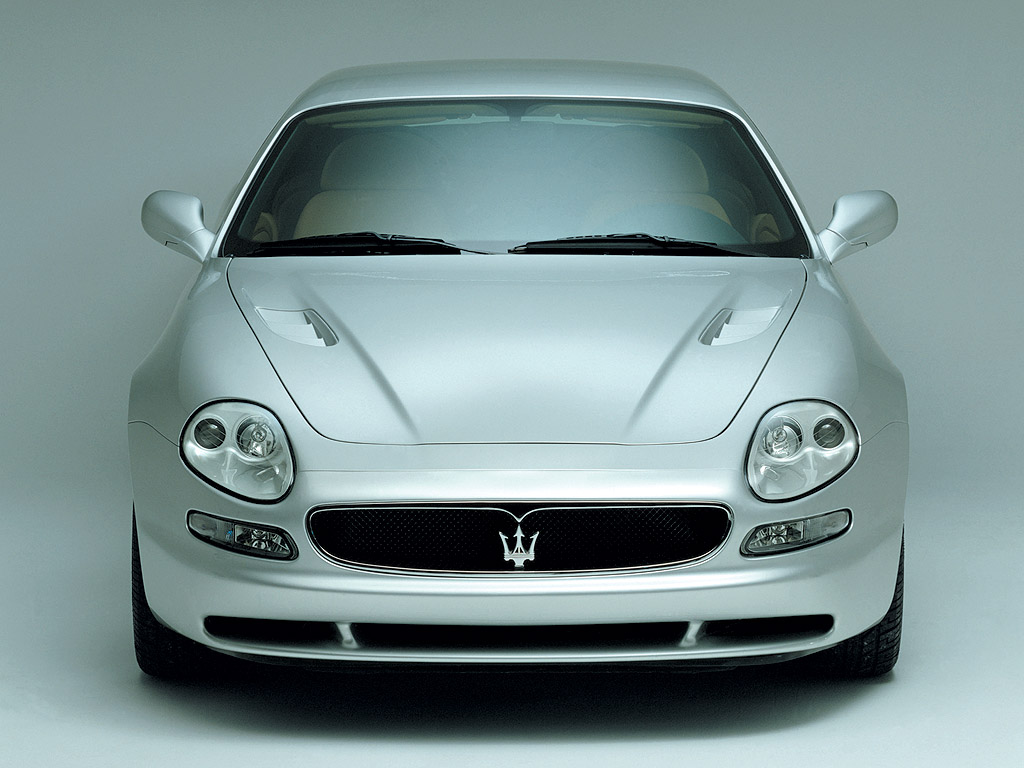
With the 3200 GT in 1998 Maserati returned to its roots. The luxury coupé was styled by Italdesign, whose founder and head Giorgetto Giugiaro penned, among others, the classic Ghibli, Bora and Merak.
The 3200 GT shared the Quattroporte IV's and Shamal's twin-turbo 3.2-liter V8, revised and tuned to 370 bhp while the 3200 GTA was equipped with an automatic gearbox and its engine delivered 368 bhp. Presented to the public at the Geneva Show in 2001, the "Assetto Corsa" was a limited-edition, run-out version of the GT with a special handling package. The 3200 GT was sold mainly in Europe.
The most remarkable detail of its design were the tail-lights consisting of the LED diodes placed in the shape of boomerang. The car was replaced in the beginning of 2002 by similarly designed successor Maserati Coupe, when Maserati decided to turn back on the US market. The original boomerang tail-lights had to be replaced because they did not fulfill the US requirements for better visibility of the car's rear end during driving at night.
Coupe
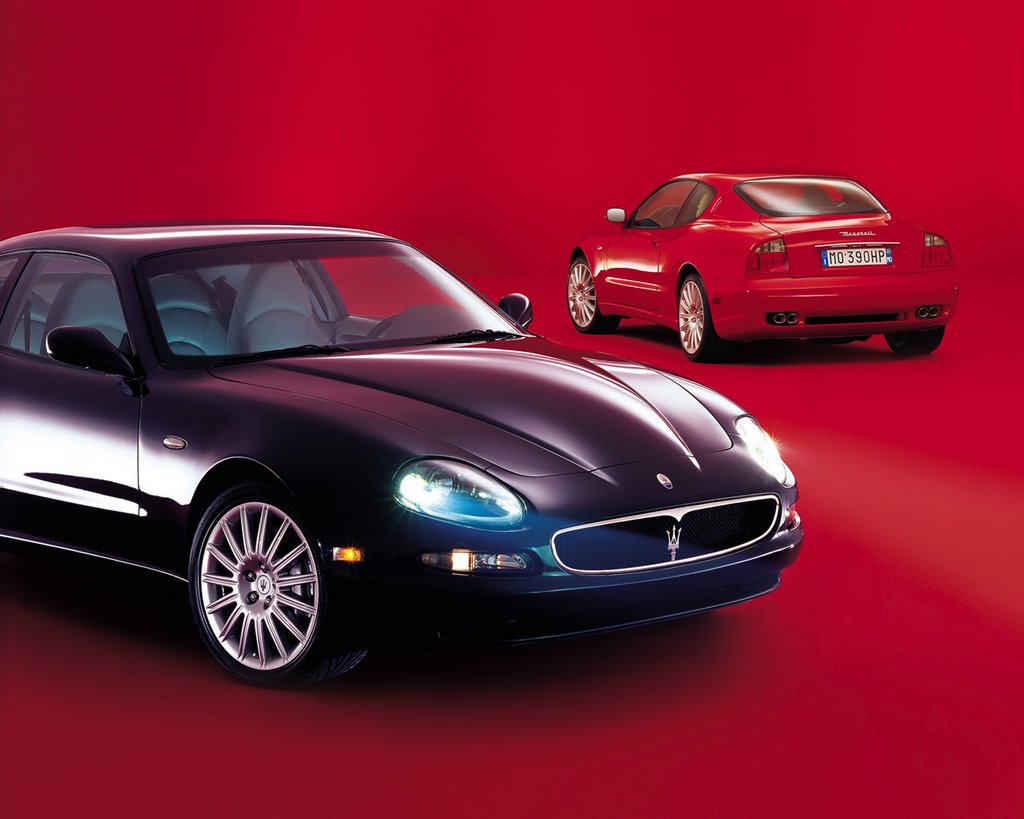
In 2002, Maserati launched the Coupe and Spyder, based on the 3200 GT, which is not sold in the United States. Both models have a normally aspirated 4.2 L engine producing 390 bhp (291 kW). The top speed is 177 mph (285 km/h), while 0-60 time is 4.9 seconds. The V8 engine was designed by Ferrari but built by Maserati. It has variable valve timing on the intake side only, while a highly developed version of this engine used in the F430 had variable valve timing on both intake and outlet sides.
MC12
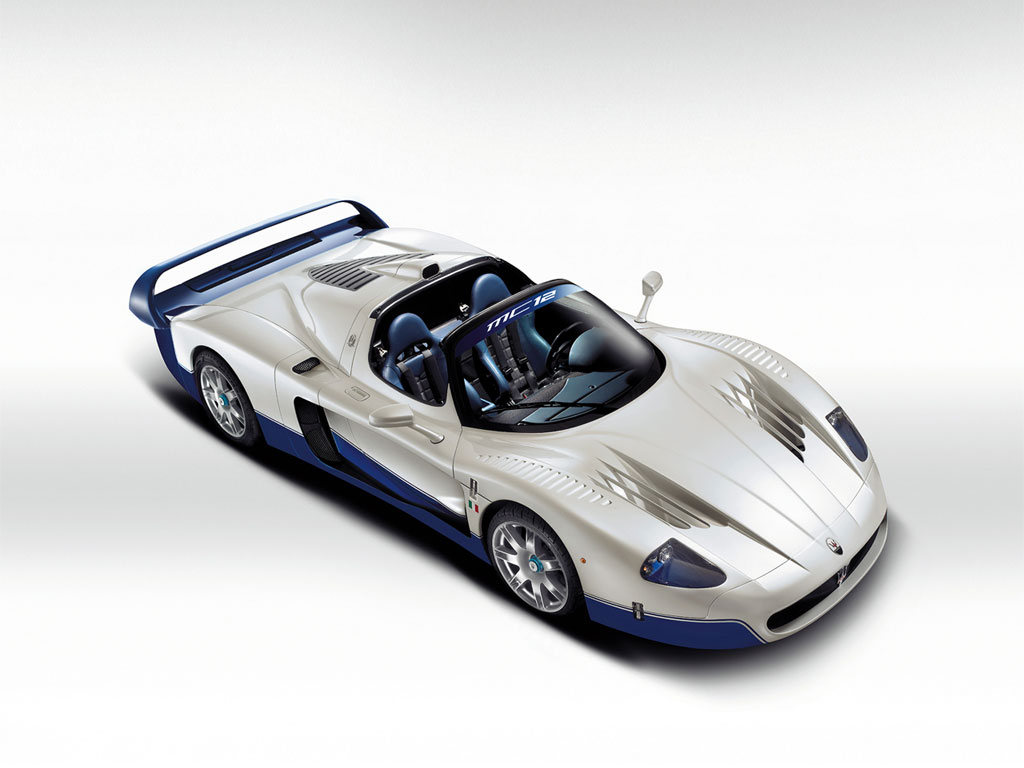
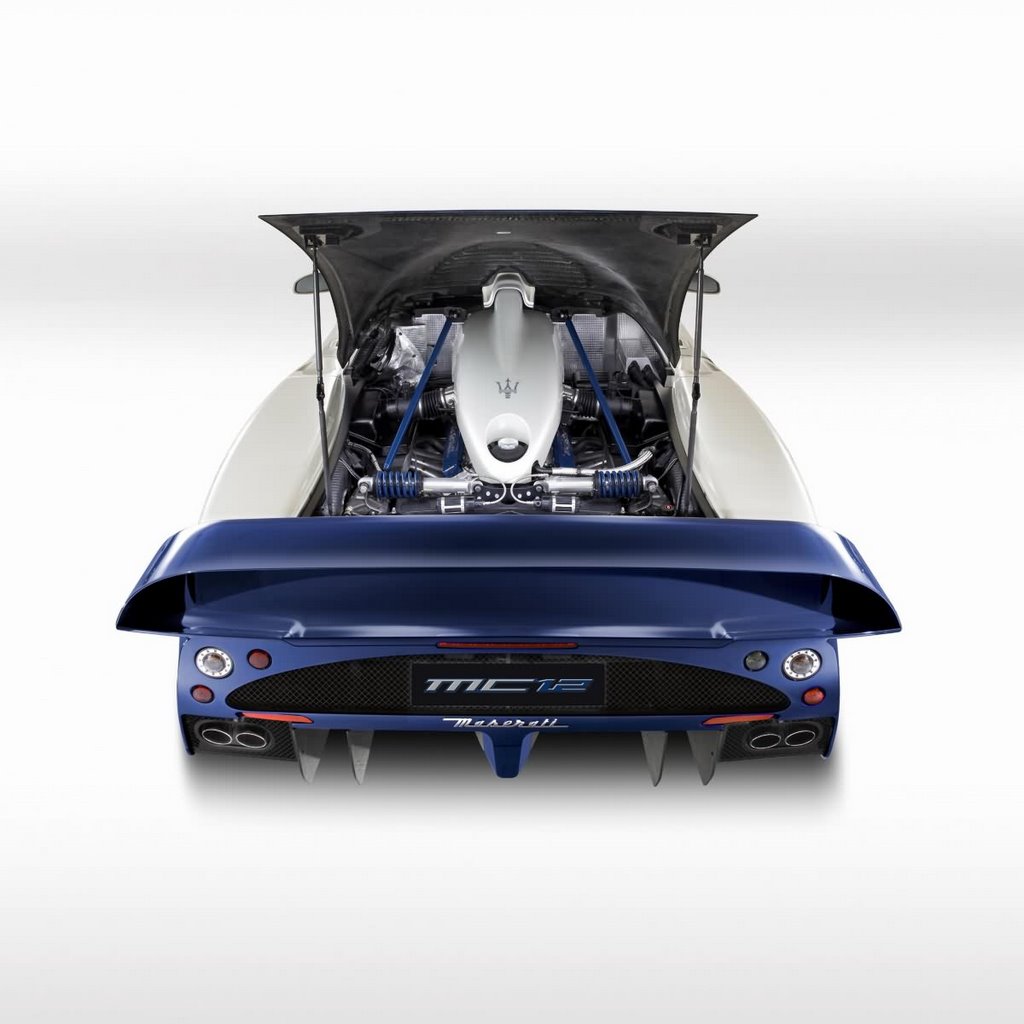
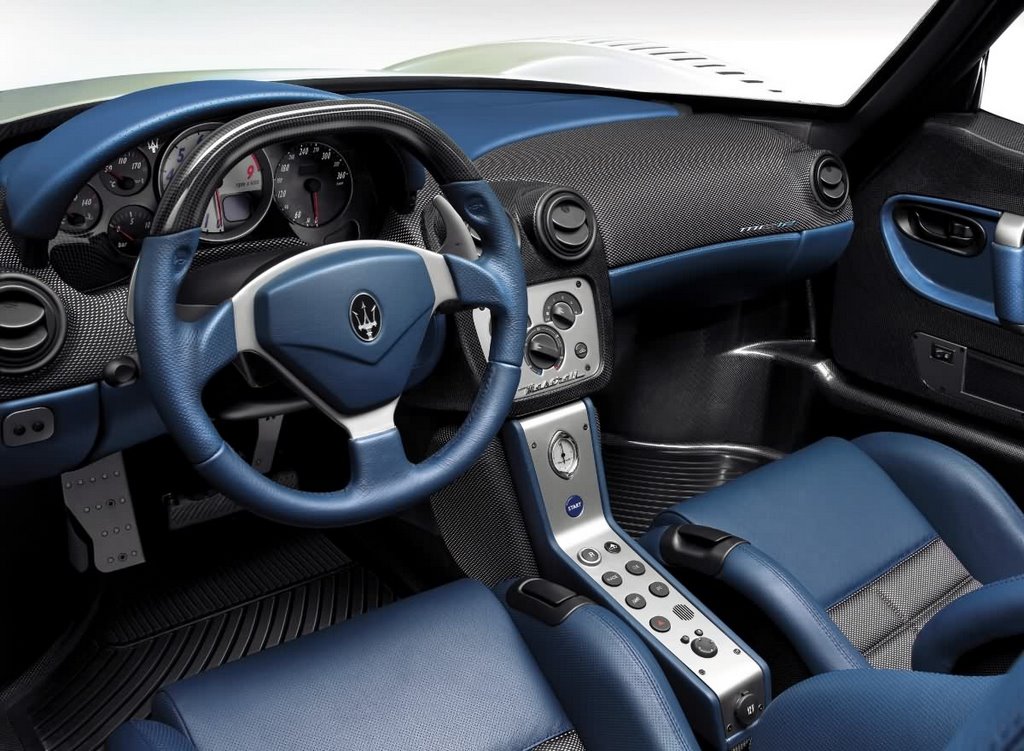
The Maserati MC12 is a super car produced by Maserati as a road car (for homologation) from which they developed a FIA GT Championship racing variant. Despite Maserati calling it a grand tourer, the MC12 qualifies as a super car, meeting all criteria. The car entered production in 2004 with 25 cars produced (5 additional cars were also produced in 2004 however they were not for sale), a further 25 were produced in 2005 making a total of 50 cars available for customers.
All 50 were pre-sold for €600 000. Maserati designed and built the car on the chassis of the Enzo Ferrari but the final car is much larger. The MC12 is longer, wider and taller than the Enzo Ferrari however the Enzo is faster accelerating and has a higher top speed.
The MC12 was developed to signal Maserati's return to racing after 37 years. 3 GT1 race cars were entered into the FIA GT with great success. Maserati began racing the MC12 in the FIA GT toward the end of the 2004 season, achieving a victory at the Zhuhai International Circuit. The racing MC12's were entered into the American Le Mans Series races in 2005 but had exceeded the size restrictions and consequently paid weight penalties.
The MC12 is a mid-engine, rear wheel drive, powered by a V12 engine in a two door coupe with a targa top roof, however the detached roof cannot be stored in the car. The mid-engine design helps keep the centre of gravity near the middle of the car and the standing weight distribution is 41% front : 59% rear, however the downforce of the rear spoiler affects this at speed so that at 200 kilometres per hour (125 mph) the (equivalent) weight distribution is 34% front : 66% rear.
The MC12 sports a 232 kilogram, 6 litre (5998 cc) Enzo Ferrari derived V12 engine mounted at 65°. Each cylinder features 4 valves, lubricated via a dry sump system and with a compression ratio of 11.2:1. All of this combines to provide a maximum torque of 652 Newton metres (481 lbf·ft) at 5500 rpm and a maximum power of 463 kilowatts (621 bhp) at 7500 rpm.
The redline rpm is indicated at 7500, despite being safe up to 7700, while the Enzo has redline at 8200 rpm. The Maserati MC12 is capable of accelerating from 0-100 kilometres per hour (62 mph) in 3.8 seconds (though Motor Trend Magazine managed 3.7 seconds) and on to 200 kilometres per hour (125 mph) in 9.9 seconds.
It can complete a standing (from stationary) quarter mile in 11.3 seconds at 198 kilometres per hour (124 mph) or a standing kilometre in 20.1 seconds. The maximum speed of the Maserati MC12 is 330 kilometres per hour (205 mph). All of these figures are slower than those of the Enzo Ferrari.
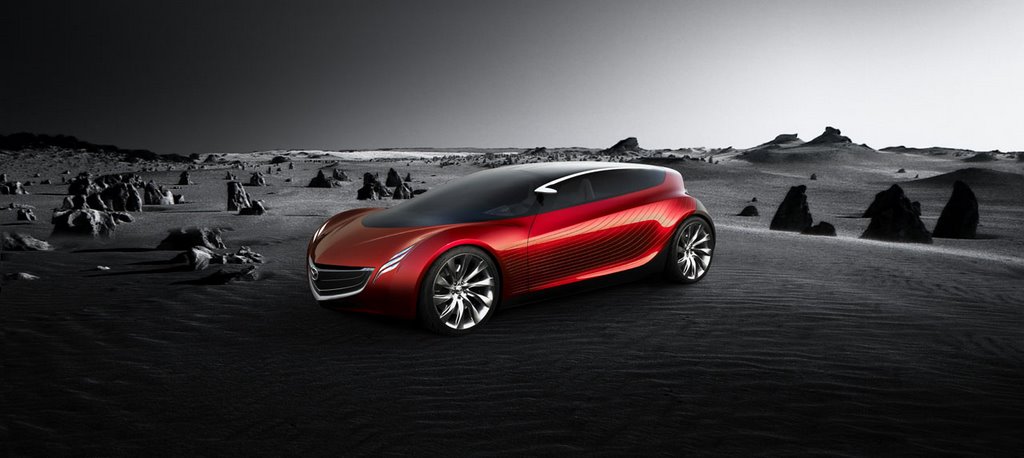
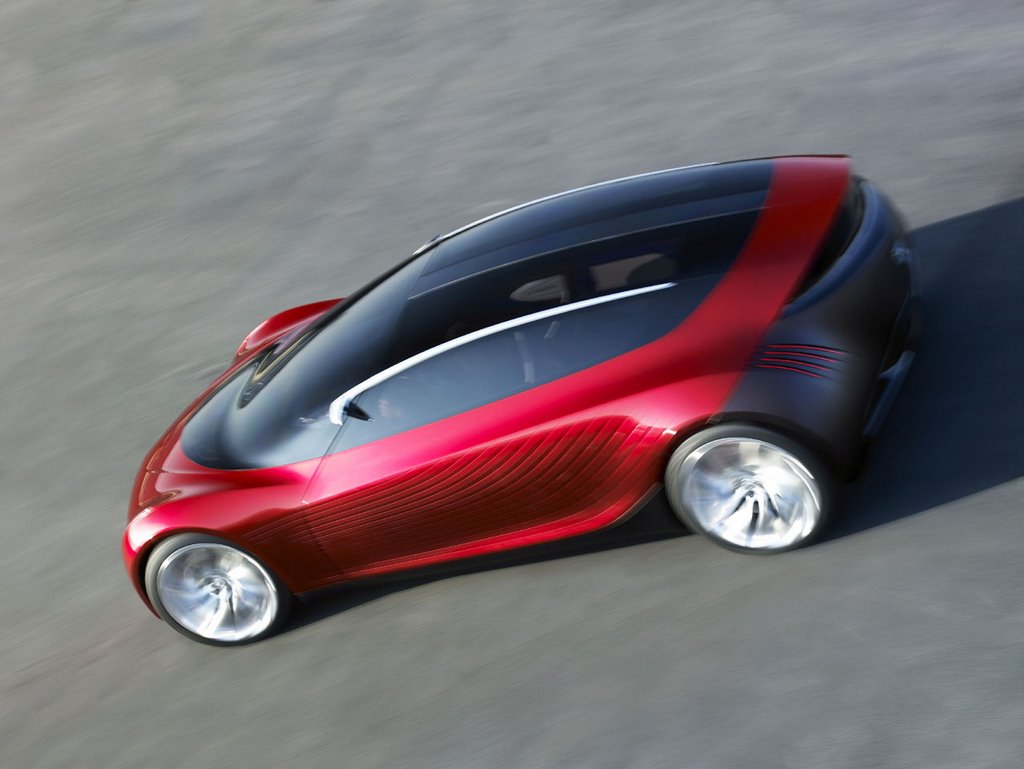
The Mazda Ryuga is a concept car introduced by Mazda and parent Ford Motor Company at the 2007 North American International Auto Show in Detroit, Michigan. The car, along with the Mazda Nagare which was introduced at the Greater Los Angeles Auto Show, is an exploratory design study intended to illustrate future styling directions for future Mazda passenger vehicles. The Ryuga moniker (pronounced "ree-yoo-ga") is Japanese for "gracious flow".
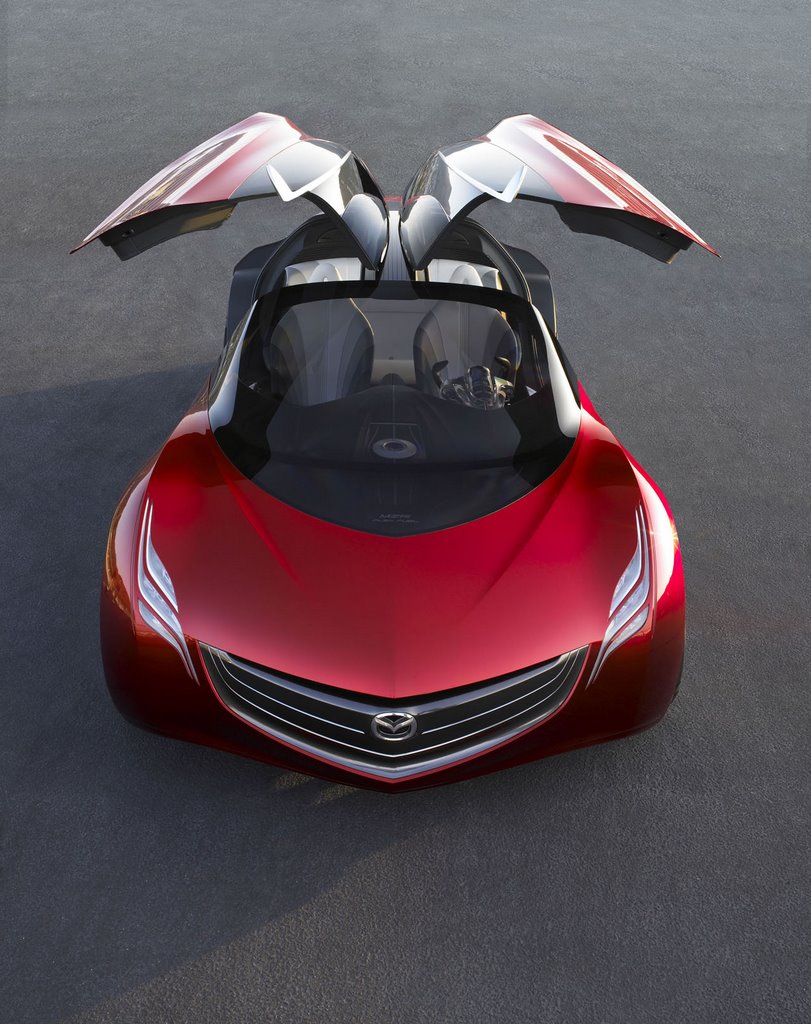
The large 21" wheels placed at the far corners for a stable, balanced stance. The body features two gull-wing doors, and is significantly shorter and lower than the four-passenger Mazda RX-8 sports car.
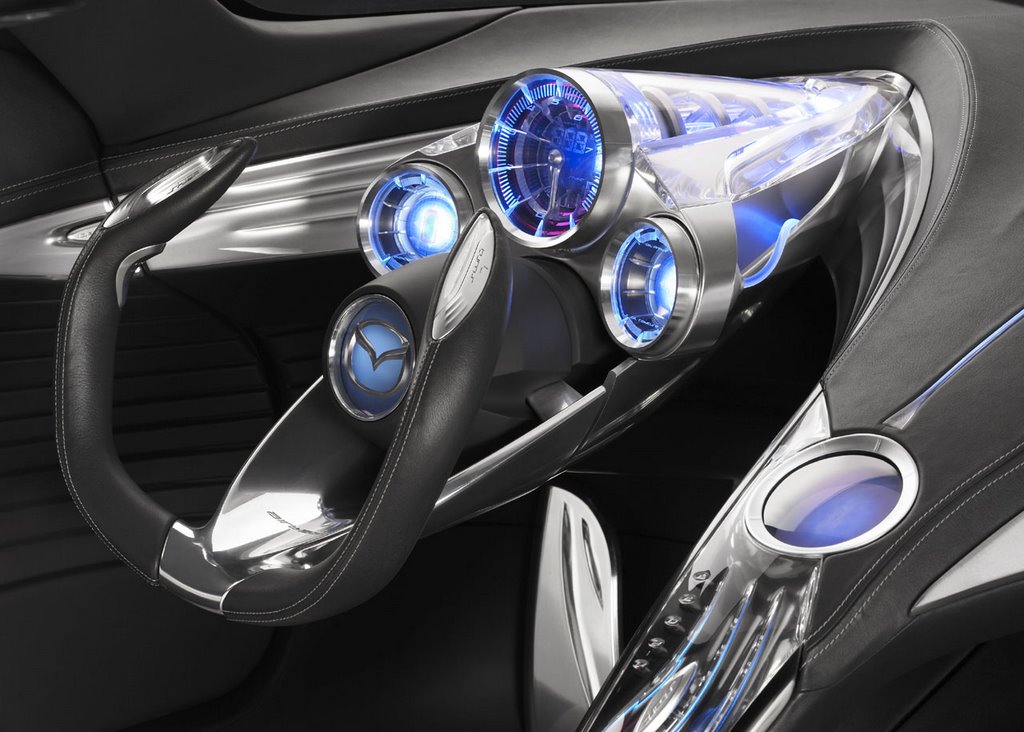
The Ryuga accommodates four passengers in typical 2+2 seating, with front bucket seats and a lounge-like rear passenger area. A "floating" center cluster with elongated pods includes a multi-function touch panel for controls and displays. A set of charge-coupled device (CCD) cameras are installed for monitoring the rearward view and blind-spot. The steering wheel is an open top style, which utilizes steer-by-wire technology.
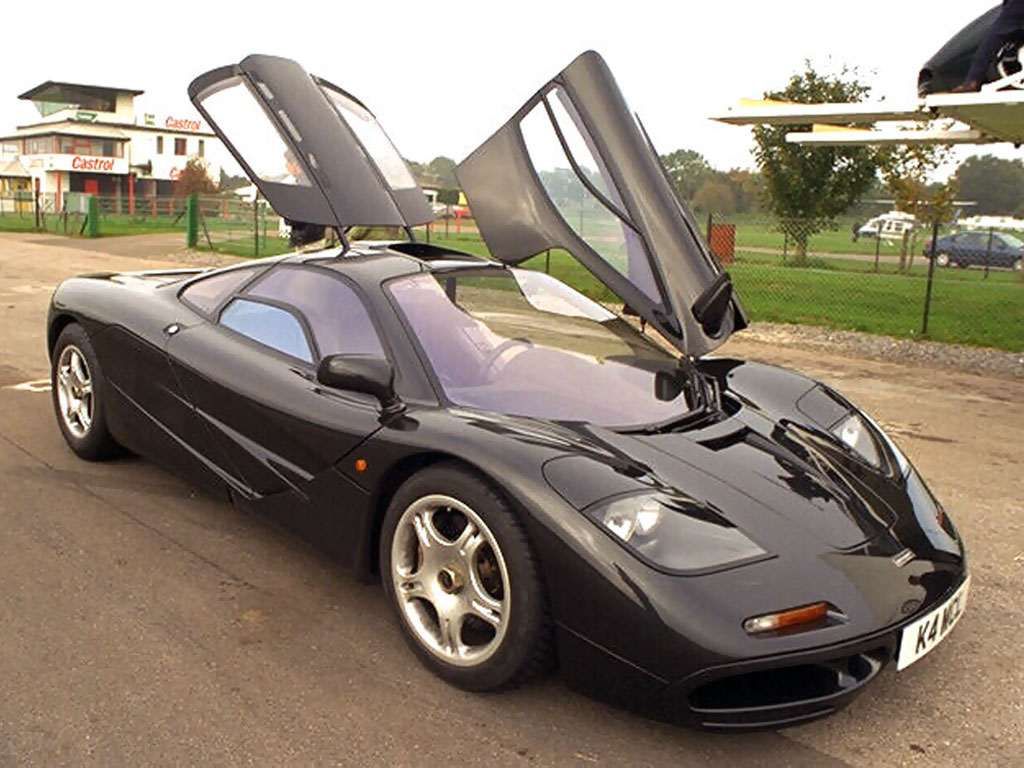
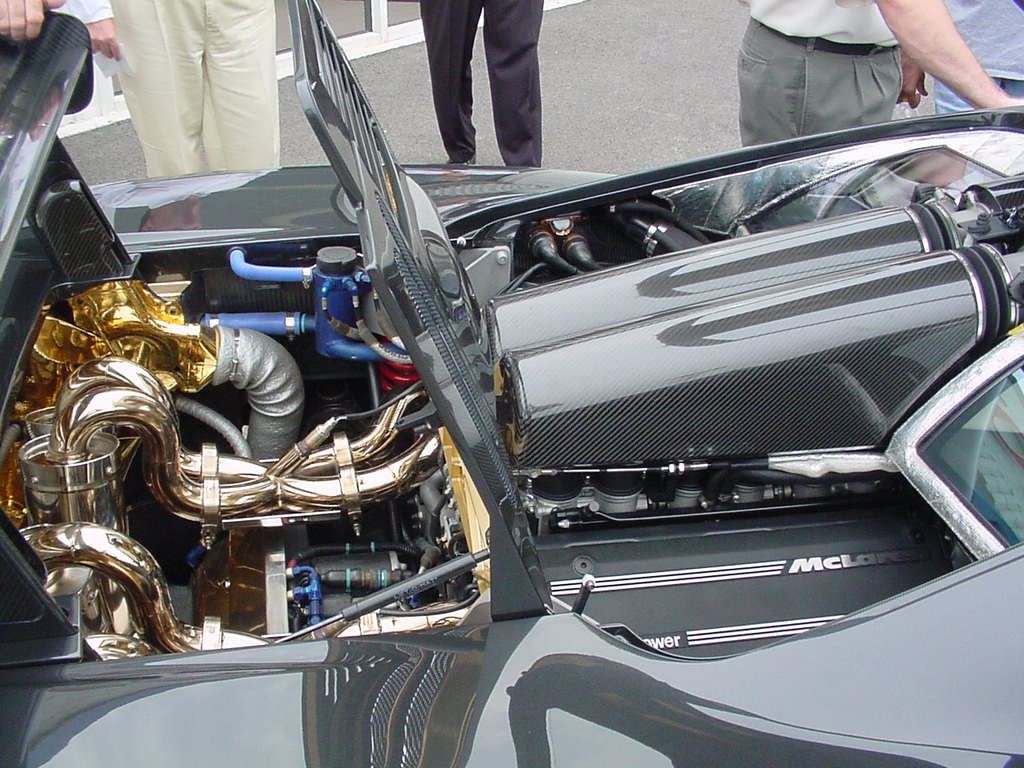
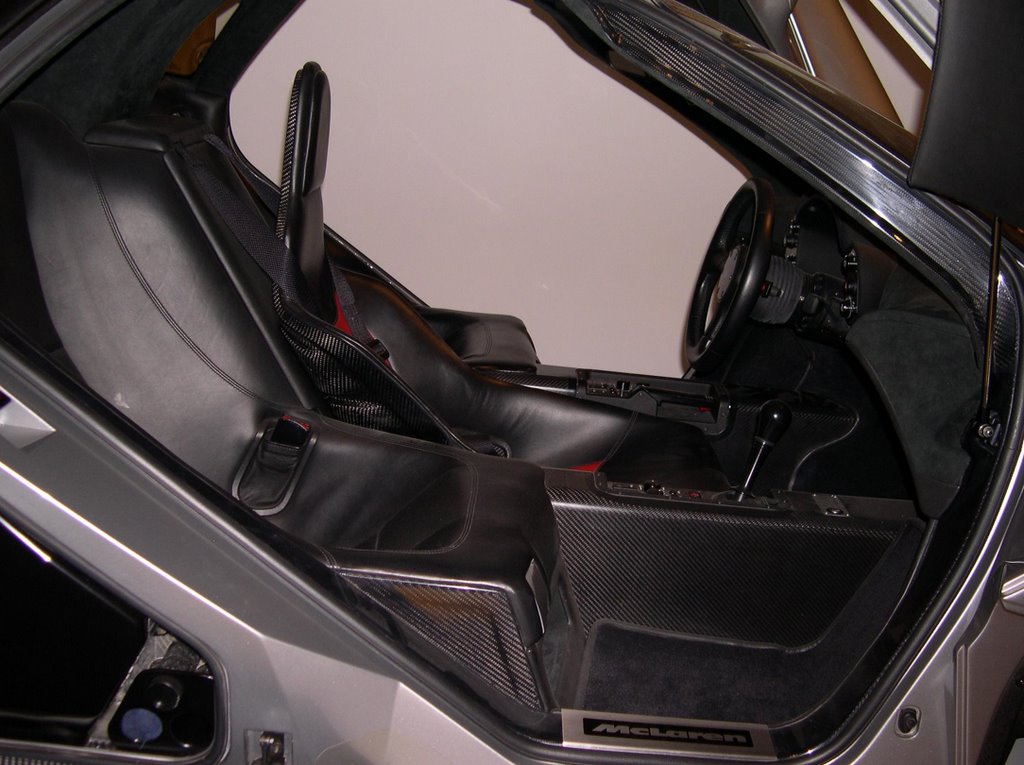
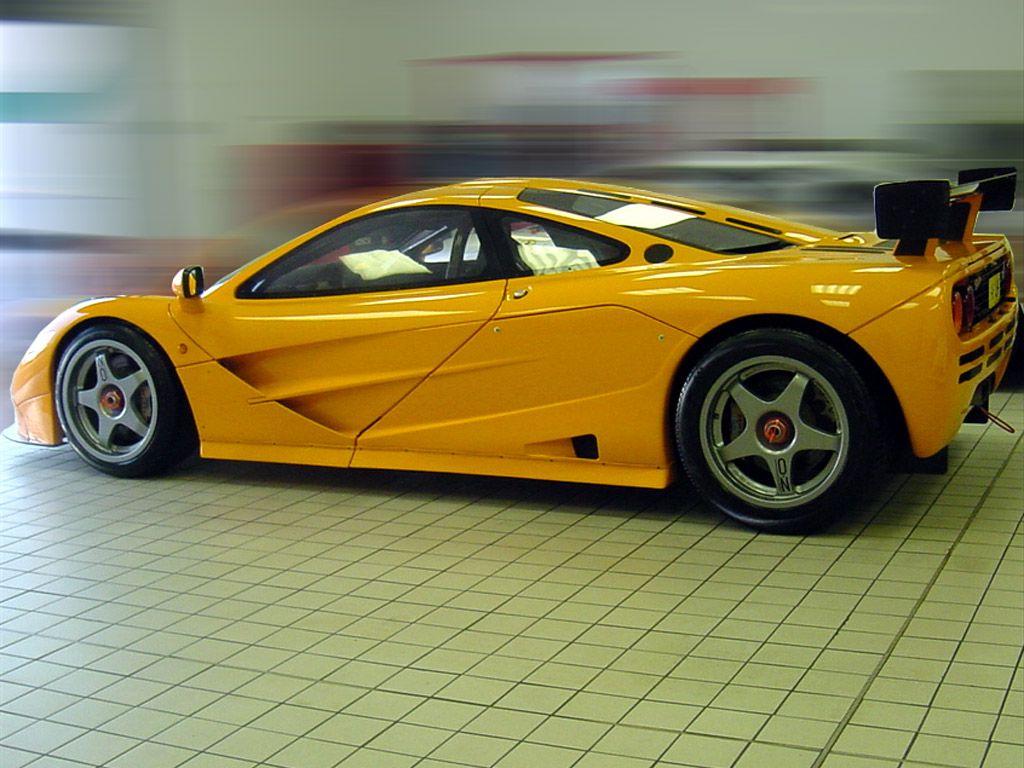
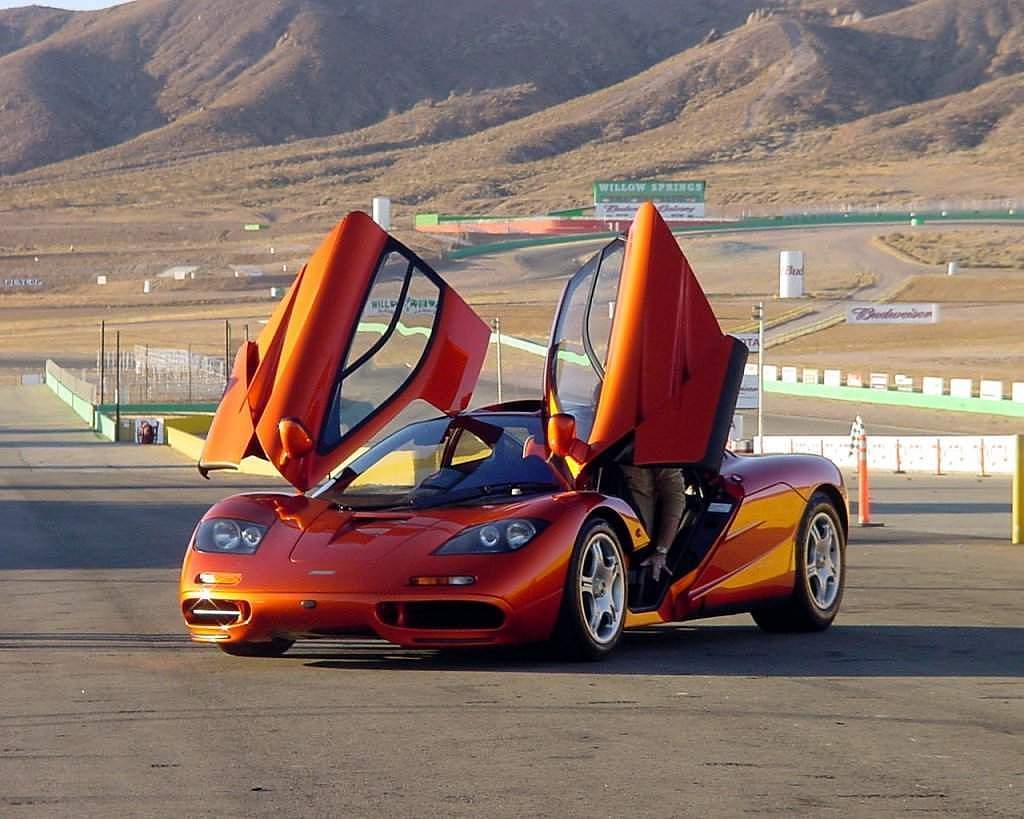
The McLaren F1 is a supercar engineered and produced by McLaren Cars, a subsidiary of the British McLaren Group that, among others, owns the McLaren Mercedes Formula One team. The car features a 6.1-litre 60° V12 BMW V12 engine and it was conceived as an exercise in creating what its designers hoped would be considered the ultimate road car. Only 100 cars were manufactured, 65 of those were street versions, 5 were LMs, 3 were GTs and the rest were GTR racing models. Production began in 1994 and ended in 1998.
The McLaren F1 was the fastest production car ever built (having achieved a top speed of 240.14 mph, 386.5 km/h) until surpassed in 2005 by the Koenigsegg CCR, and then the Bugatti Veyron a few months later.
The car remains as one of the most popular modern supercars, and is quickly securing a spot among the most famous cars ever made.
Performance
The car may have been relatively small, but its performance was not. With a 0 to 60 mph (97 km/h) time of 3.1 seconds and an official top speed of 240.14 mph (386.4 km/h), although with the rev limiter removed, the F1 remains one of the fastest "production" cars ever made.
While most car manufacturers rate their cars in terms of raw engine power, in terms of overall performance (acceleration, braking, grip and handling) a car's weight is a more important factor. The power:weight ratio is a better way to quantify performance than the power of the engine.
By this measure, the F1 was one of the most powerful production cars ever made. The F1 achieves 550 hp/ton, or just 4 lb/hp, while the Enzo (even with its significantly higher raw output) lags behind the F1 at 481.75 hp/ton (4.6 lb/hp) due to its greater weight. McLaren F1
* 0-60 mph 3.1 s
* 0-100 mph 6.3 s
* 0-150 mph 12.8 s
* 0-200 mph 28.0 s
The Mclaren F1 has a top speed of 231 mph, restricted by the rev limiter at 7500 rpm. The true top speed of the Mclaren F1 was reached on the 31st of March, 1998 by the five-year-old XP5 prototype. Andy Wallace piloted it down the 9 km straight at Volkswagen's Ehra-Lessien test track in Wolfsburg, Germany, setting a new world record of 391.1 km/h (240.1 mph) at 7800 rpm.
As Mario Andretti noted in a comparison test, the F1 is fully capable of pulling a seventh gear, thus with a higher gear ratio or a seventh gear the Mclaren F1 would probably be able to reach an even greater top speed (something which can also be observed by noticing that the top speed was reached at 7800 RPM while the peak power is reached at 7400 RPM).
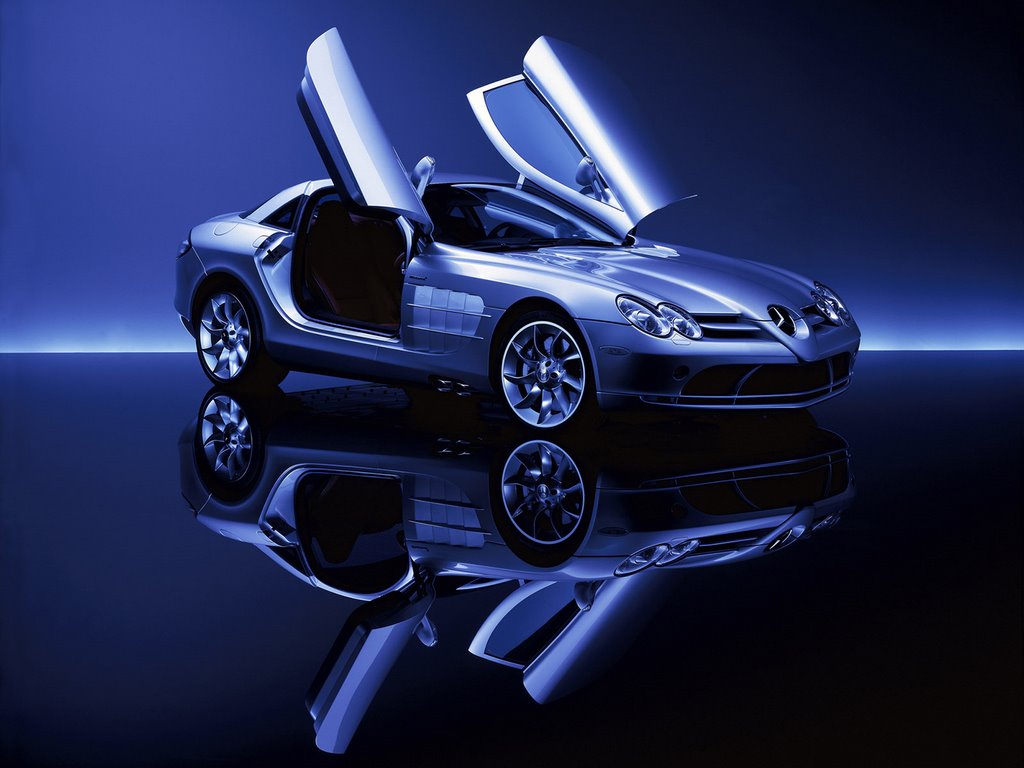
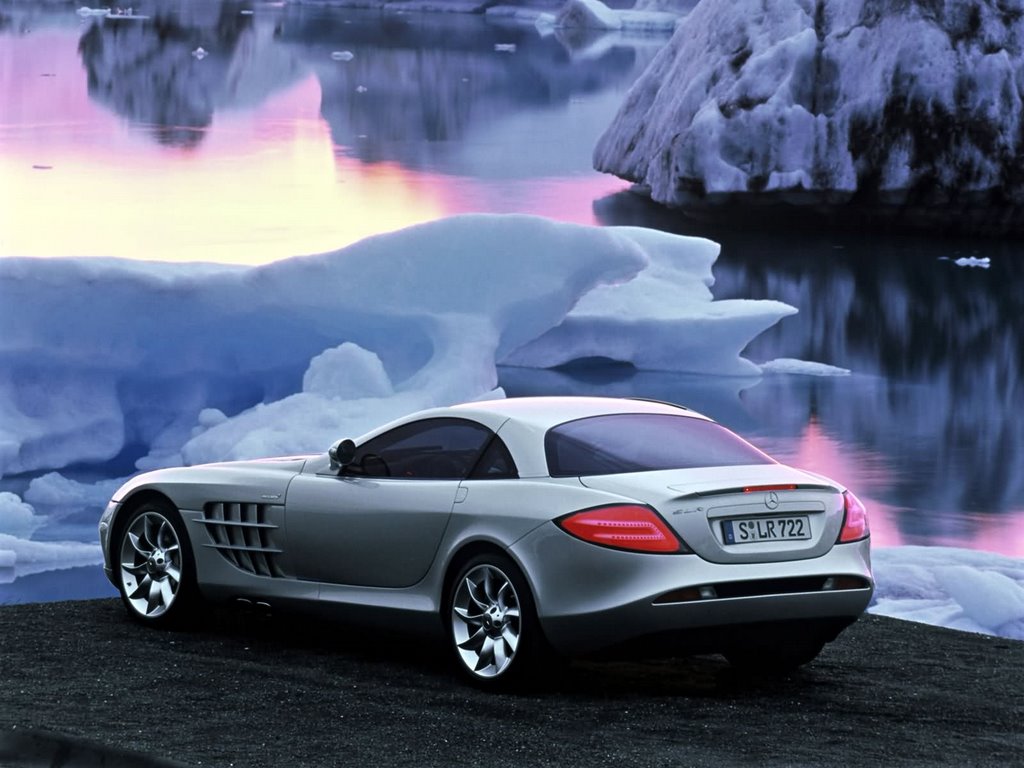
The SLR has a supercharged 5.5 (5439 cc) litre dry sumped 90 degree V8. It produces 466.8 kW at 6500 rpm (626 hp) and 780 N·m (575 ft·lbf) torque at 3250 - 5000 rpm. AMG technicians took the original SL-55 AMG engine and optimized its capacities by enlarging the fuel pump, the cylinders, and put a larger cooling system that absorbs air to cool down the engine. It has 3 valves per cylinder with SOHC.
This is very unusual as most supercars, indeed most modern cars, have DOHC and 4 valves per cylinder, but it keeps with the recent trend in modular V engines from Mercedes Benz and decreases engine emissions. The Twin-screw type supercharger and the 2 aluminium rotors have a maximum speed of 23,000 rpm. It is mounted between the two engine banks and uses 120 bhp at maximum capacity.
Unlike most of its contemporaries, its engine is front-mid mounted. McLaren took the original concept car designed by Mercedes and moved the engine fully 1metre behind the front bumper, and around 50 cm behind the front axle. They also optimised the design of the centre firewall.
Mercedes-Benz claims that the car accelerates from 0 to 100 km/h in 3.8 seconds (0-60 mph in 3.4 seconds at 98 °F), 0-200 km/h in 10.6 seconds, and 300 km/h in 28.8 seconds, and has a top speed of 334 km/h (207 mph) which made it the fastest automatic car in the world until 2005, when the Bugatti Veyron arrived. The car uses carbon fibre for its body construction which makes it lighter. The car is, however still quite heavy at 1768 kg due to the numerous luxury items included in it. It has never reached a higher speed than 210 mph.
Car and Driver got a 0-60 time of 3.6 seconds, and a quarter-mile time of 11.6 seconds at 125 mph. These are during a test session that took place in the late afternoon, when October temperatures were on the decline. C&D suggests the times may be even lower if temperatures were higher. Car and Driver got top gear acceleration 30-50 mph and 50-70 mph times of 1.7 and 2.4 seconds, which are the fastest ever recorded by the magazine in a production car. The SLR also pulled 0.97 g on the skidpad.
The German magazine Auto Motor und Sport, in 2004, tested the SLR at the Nardo test track in southern Italy. They reported that the SLR accelerates from 0 to 100 km/h in 3.8 seconds, 200 km/h in 10.7 seconds, and 300 km in 30.6 seconds. The car's 400-meter time and 1 km time were found to be 11.5 seconds at 207 km/h, and 20.5 seconds at 269 km/h, respectively.
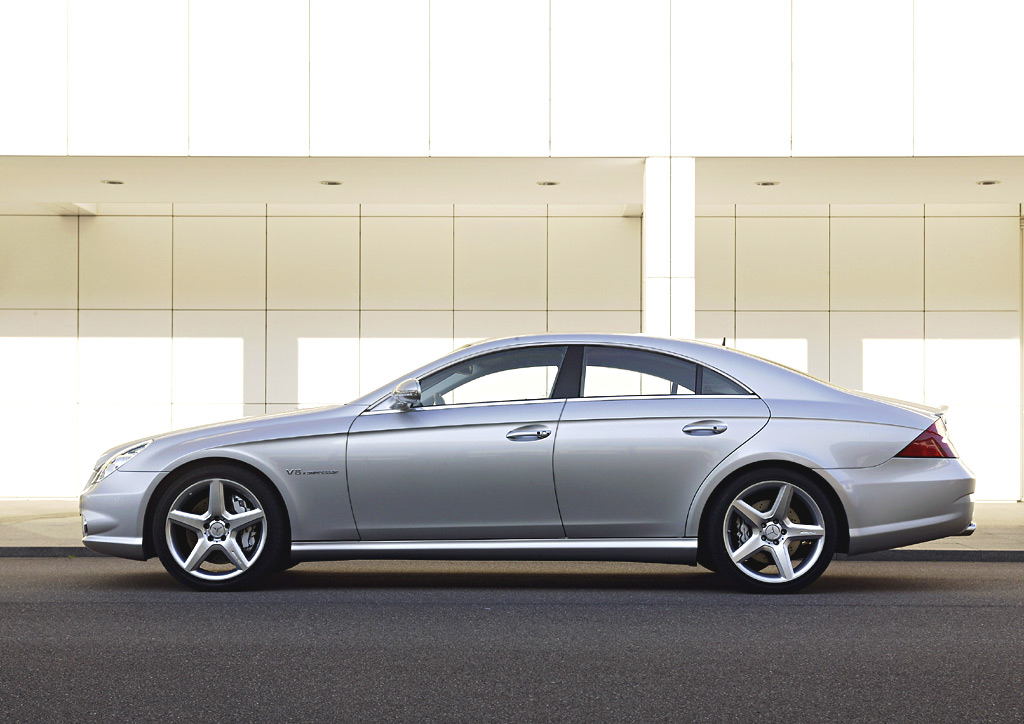
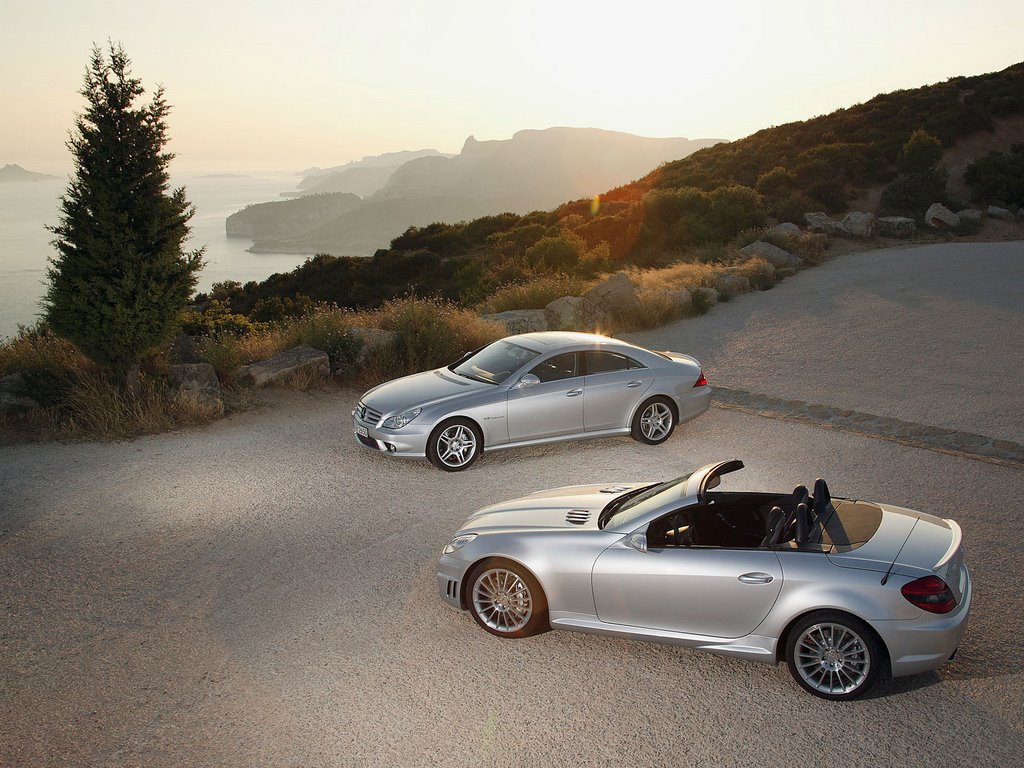
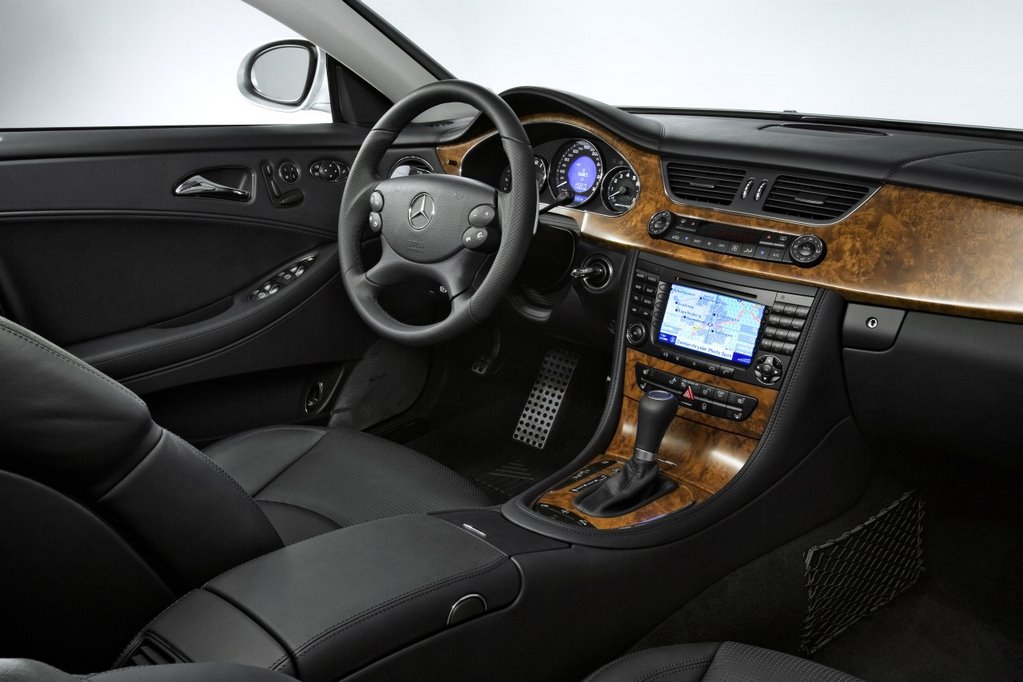
Mercedes-Benz CLS-Class
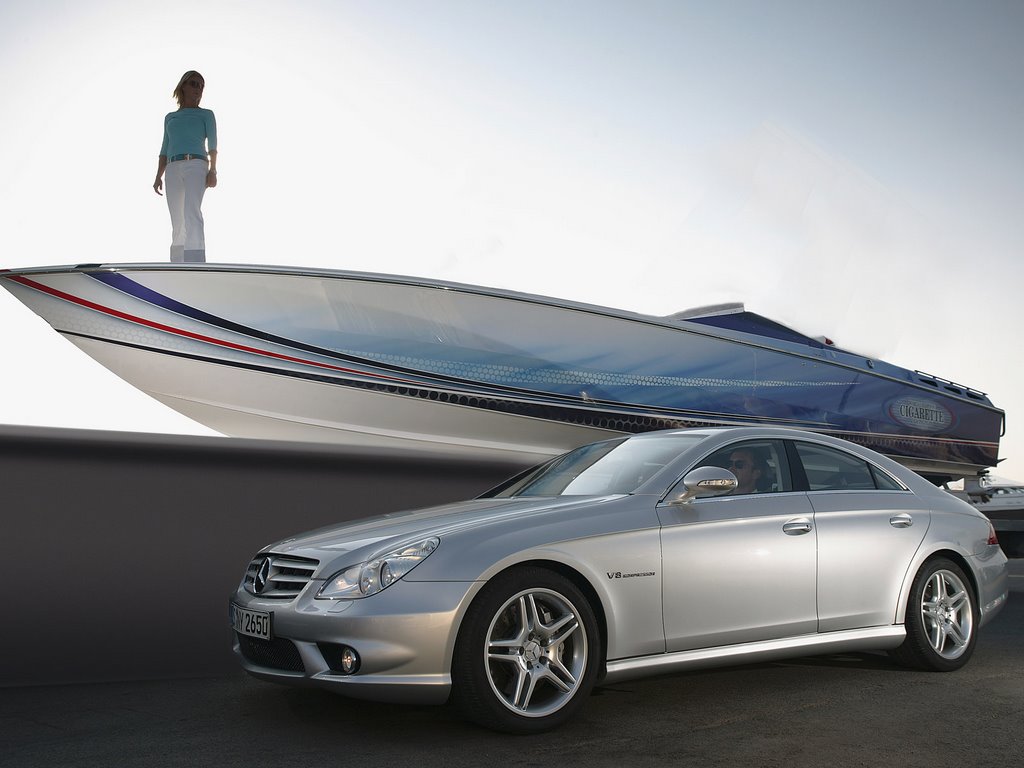
This class was first offered for sale in Europe in autumn 2004. The model uses the Mercedes-Benz W219 designation, and borrows the platform of the contemporary E-Class sedan. It is six inches(152 mm) longer than the E-Class. The car was designed to slot between the E-Class and the S-Class, and compete against the BMW 6-series, Cadillac STS and Lexus GS, along with other fastback sedans.
Marketed as a 'four door coupe,' the CLS recalls the fastback sedan designs of Robert Opron in the 1970's. According to a Mercedes-Benz press release, the CLS-class was produced to combine the "strong, emotive charisma" of a coupe with the "comfort and practicality" of a sedan. Due to the popularity of the CLS-Class, other manufacturers are offering similar designs. Audi plans to release a 4-door coupé called the A7, Porsche will have the Panamera, Aston Martin is showing off its Rapide.
During its development, Mercedes-Benz executives nicknamed the CLS the "Jag fighter," hoping that it would be the type of vehicle that Jaguar customers would be attracted to. Jaguar, however, has not launched a four-door coupe to compete with the CLS.
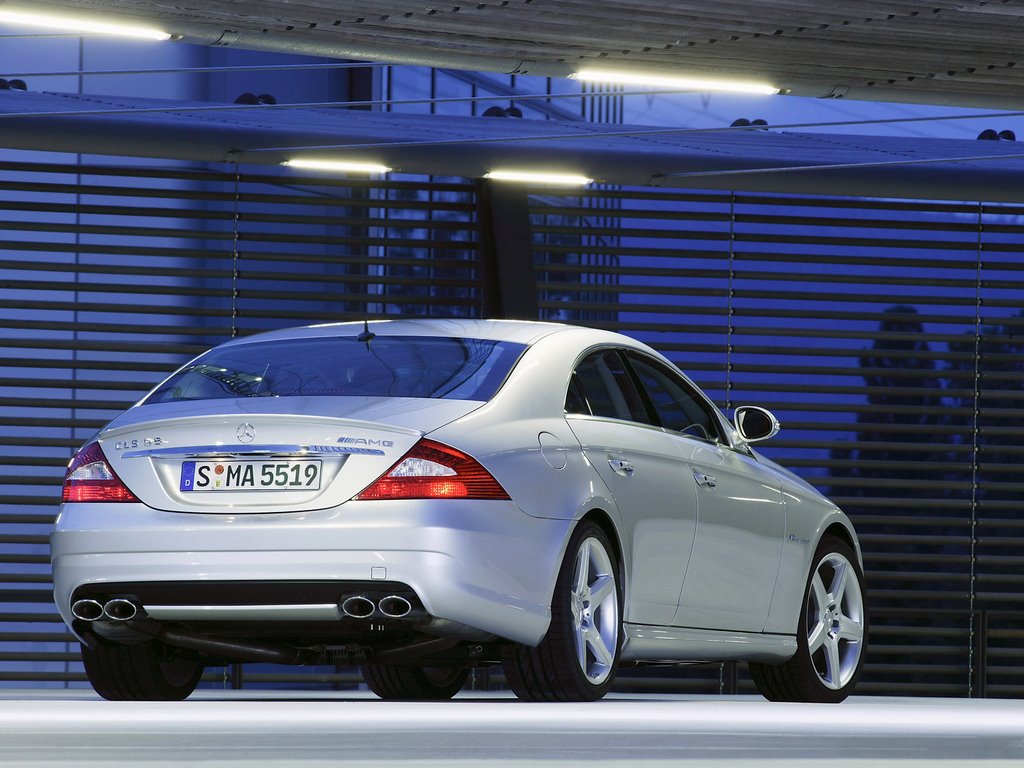
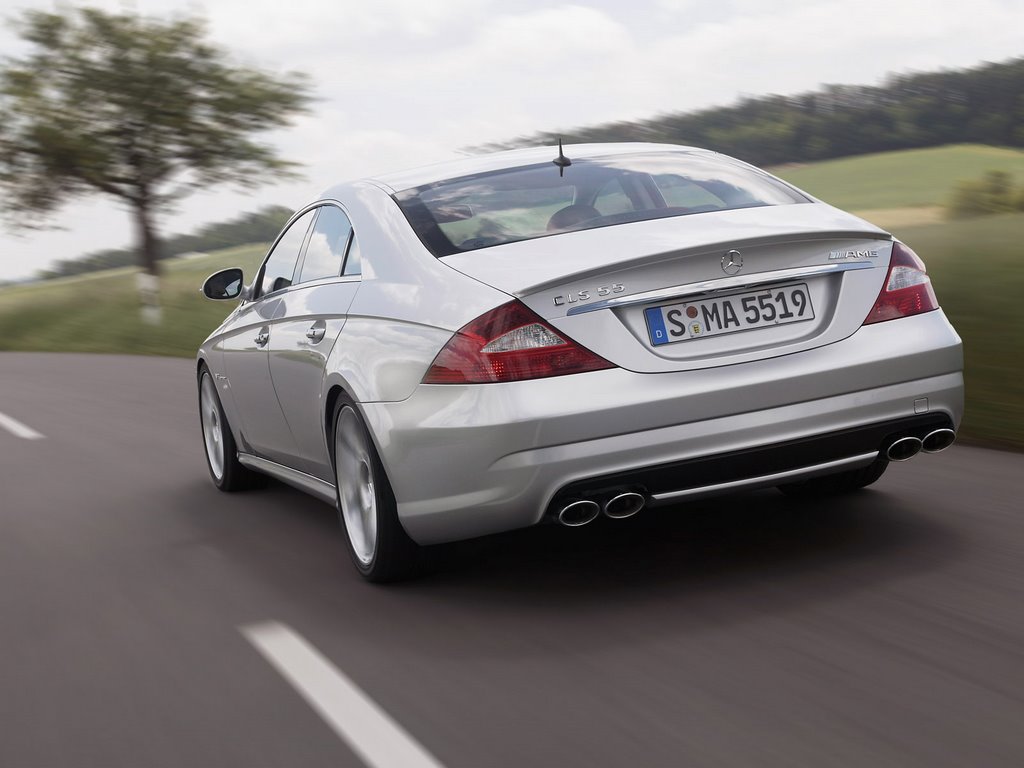
The CLS-class was first displayed as the Vision CLS concept at the 2003 Frankfurt International Motor Show. The production version CLS 500 made its debut at the 2004 New York International Auto Show. A new AMG model was introduced at the 2004 Paris Motor Show, the CLS 55 AMG. Only 3,000 CLS 55 AMG cars will be built each year.
The CLS was first offered for sale in the United States in January 2005; only the CLS 500 and CLS 55 AMG are sold in the United States. The CLS 500 has a base price of US$65,620, with the CLS 55 starting at US$87,320.
CLS63 starts at $92,500 for a "base" model, and is offered with steering wheel mounted paddles (F-1 style), and huge 19" wheels for the US market.
The CLS 350 and CLS 500 have a 7-speed automatic transmission. The CLS 55 features Mercedes renowned five speed automatic gearbox that can be shifted manually or automatically.
A diesel version, CLS 320 CDI, is available for the European market with a 3 liter V6 producing 224hp (167kw) and 510 N.m (376 lbf) of torque.
IVM Automotive, a subsidiary of German roof system specialist Edscha, developed the entire vehicle from the Vision concept to the production version. More than 150 IVM engineers were involved, making the CLS the largest vehicle development project in the company's history.
Mercedes-Benz has planned a yearly production of 30,000 units worldwide, of which about 10,000 will be allocated to the U.S market.
For the model year 2007, Mercedes-Benz has replaced the CLS 55 AMG with the CLS 63 AMG. The CLS 63 uses the newly developed AMG M156 naturally aspirated V8 engine capable of 514hp (378kw) and 630 N·m (464 ft·lbf) of torque.
Although the CLS63 AMG weights 4,210 lbs, it can reach 60 mph from a stand still in 4.3 seconds, faster than many sports cars. The 550 does it in 5.4 seconds, relatively fast also.
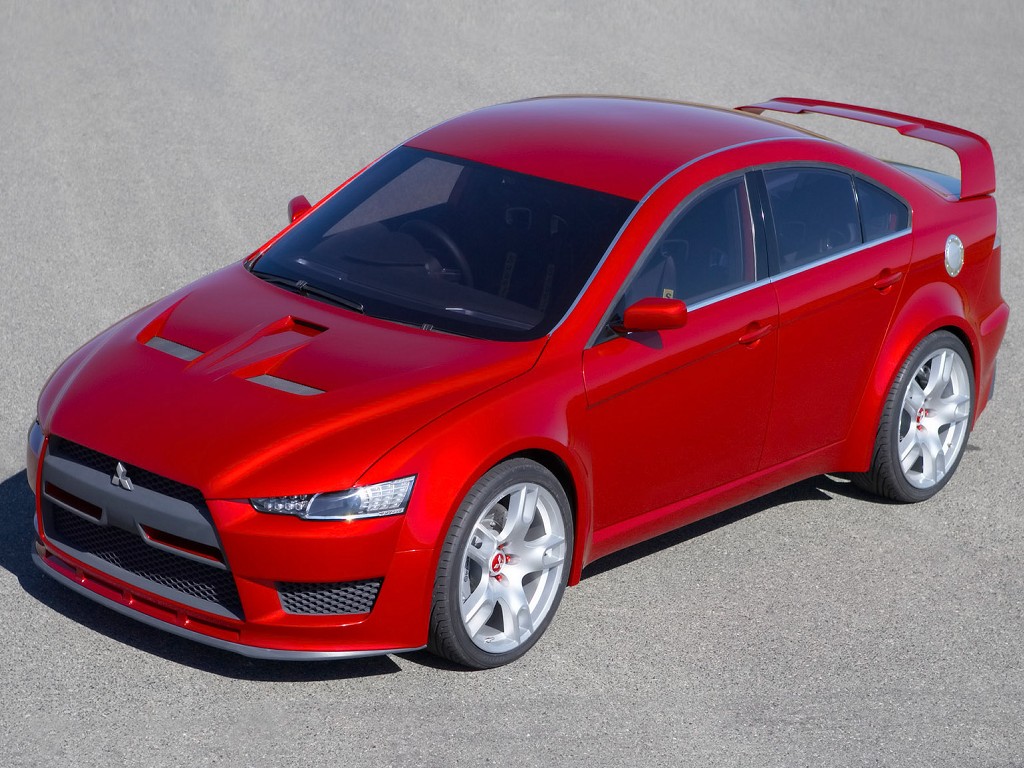
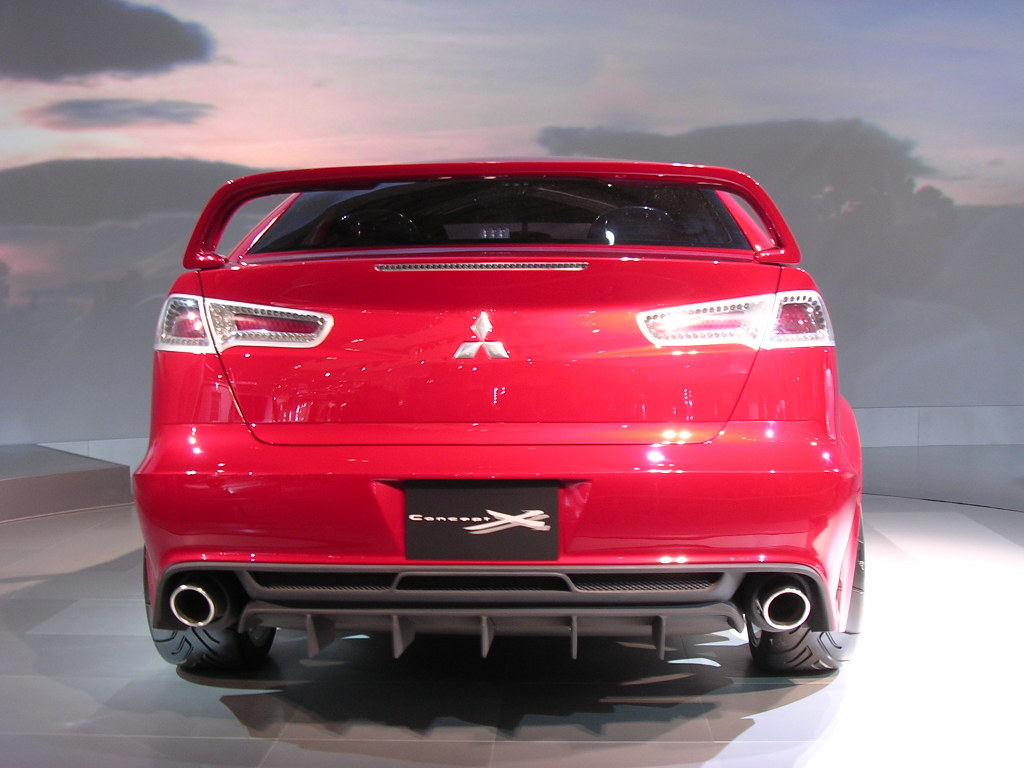
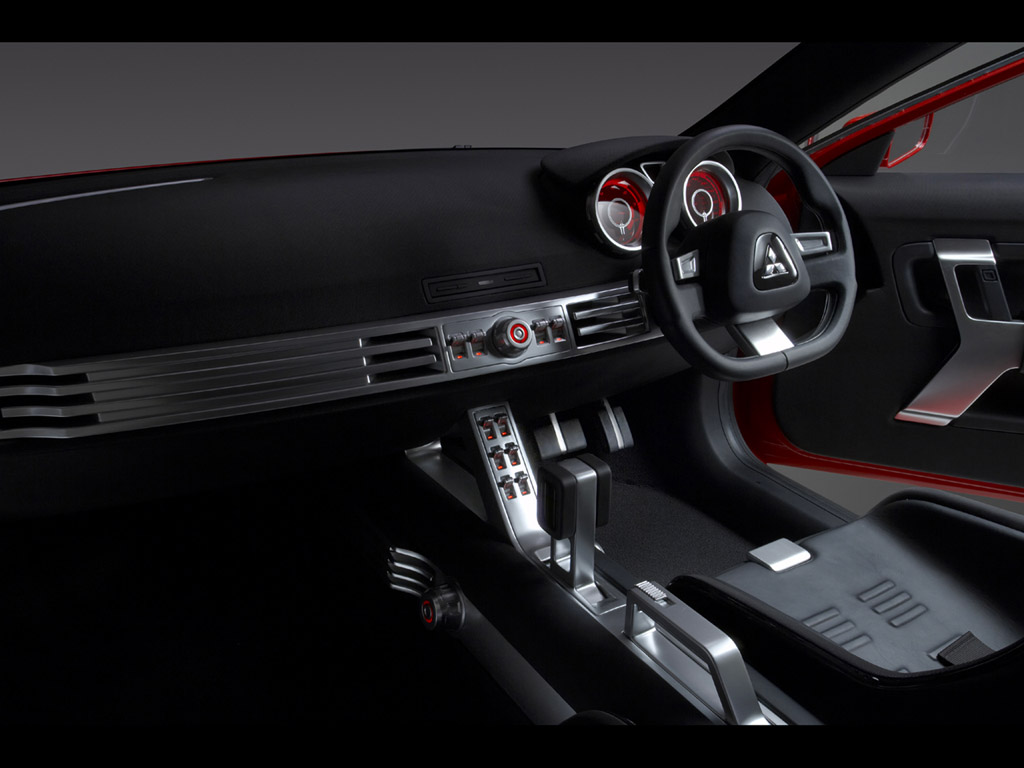
Mitsubishi introduced a concept version of the next-gen EVO at the 39th Tokyo Motor Show named the Mitsubishi Concept-X.
It is said to be put into production by mid 2007. The Mitsubishi Lancer Evolution X (10) will feature a completely redesigned chassis and computer system. It will boast a new all wheel drive system that will control braking, throttle input, and real-time suspension adjustment (all together called S-AWC, or Super All Wheel control) simultaneously with the Active Center Differential.
The S-AWC uses Torque vectoring to send different amount of torque to any wheel at any given time. It will also featue an auto-manual six speed transmission with shift paddles. It is also said that the next generation Evo is likely to feature a twin-clutch Direct-Shift Gearbox-style transmission option.
Mitsubishi debuted the Prototype-X concept at the 2007 North American International Auto Show (NAIAS) in Detroit, Michigan, USA. There is speculation among the press that the concept is in fact a lightly disguised Lancer Evolution X, and the production model will have minimal differences at most.
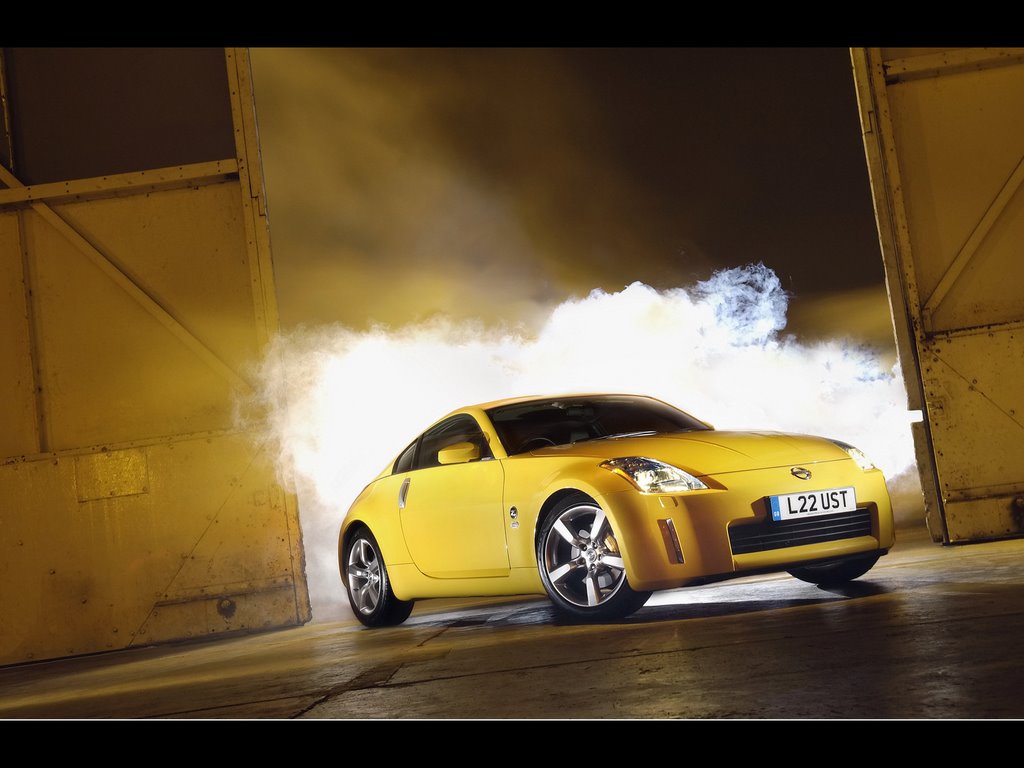
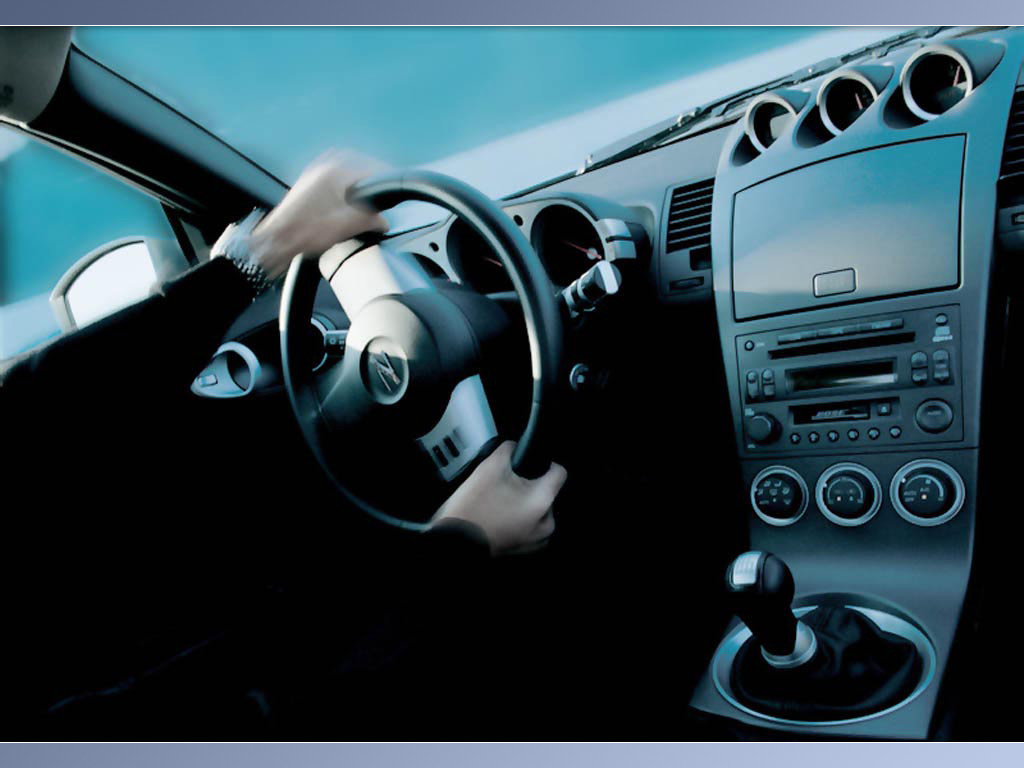
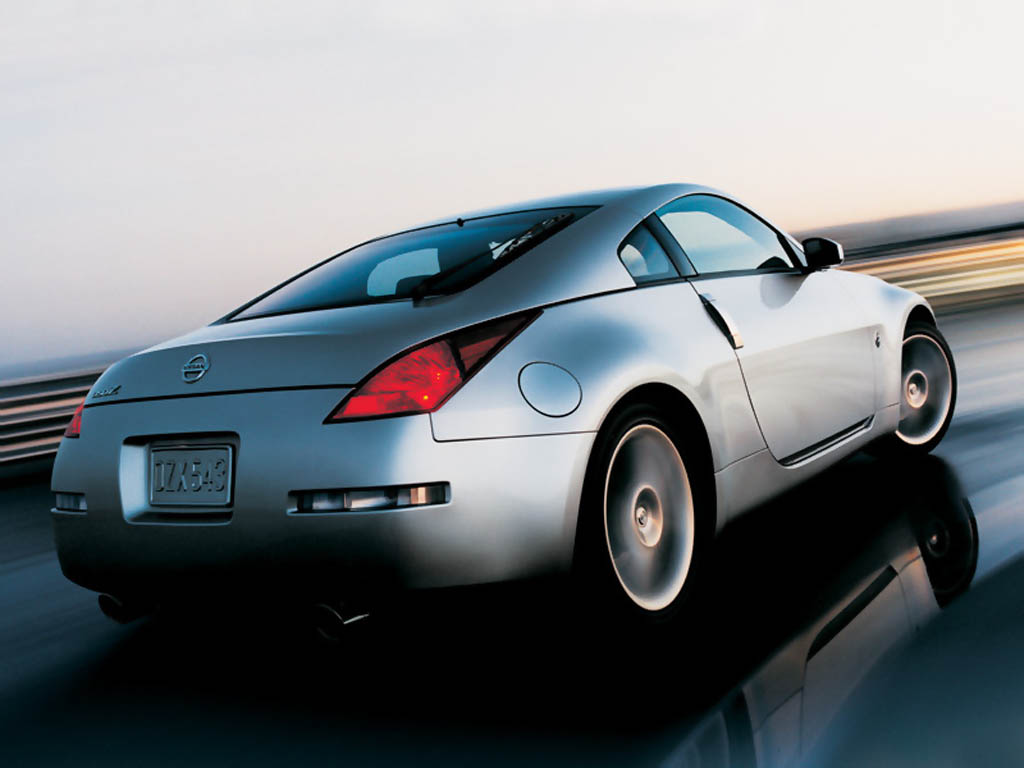
Released on August 20, 2002, the 2003 350Z coupé was available in the U.S. in 5 trim packages, including the Base, Enthusiast, Performance, Touring, and Track Editions. In Europe only the Base version and a GT pack were sold. The GT pack had leather seats, uprated Bose stereo system and cruise control over the Base model. Nissan's performance tuning division, Nismo, began producing modified versions of the car shortly after its introduction, although in the UK these were only available one year after the car was launched.
In 2004 Nissan introduced the 350Z roadster featuring an electrically retractable soft-top hood. The car came in 2 trim packages (Enthusiast and Touring)in the U.S. market, and the Base and GT packs in Europe.
In 2005 Nissan launched a 35th Anniversary edition, which featured options such as "Z" emblems and 5-spoke wheels. The 2005 35th Anniversary edition 6-speed manual and 2005 Track trims both produce 300 hp and 296 torque (224 kW). In addition, The 35th Anniversary and Track 350Z also included revised pistons and camshaft profiles, and a new type of control to the variable valve timing. Although there were increases in power, the changes lead to a decrease in peak torque in the vehicle.
Nissan also added the Grand Touring trim to the Roadster trim packages for 2005. Since the anniversary edition all 6-speed models produce 300 hp / 260 ft·lb (224 kW / 353 N·m).
* Engine: 3.5 L VQ35DE V6 engine
* Output:
o 306 hp (Compared to old rating this new power would equate to 315hp - 320hp ) / ?? ft·lbf (?? N·m) 6-speed manual, 2007 350Z and Infiniti G35 and all 2007 models with 6-speed manual transmission exceot the G35 coupe.
* new output calculations have recently been adopted (Compared to old rating this new power would equate to 315hp - 320hp)
o 300 hp (223 kW) / 260 ft·lbf (352 N·m) 35th Anniversary 6-speed manual, 2005 Track Edition and all 2006 models with 6-speed manual transmission
o 287 hp (214 kW) / 274 ft·lbf (371 N·m) 35th anniversary automatic, all 2006 models with automatic transmission and all other models from 2003 to 2005
* Acceleration: 0 to 60 mph (0 to 100 km/h): 5.3 seconds and the quarter mile (400 m) in 13.6 seconds @ 100 mph / 160 km/h (as tested by Motor Trend)
* Top speed: 156 mph (255 km/h) electronically limited
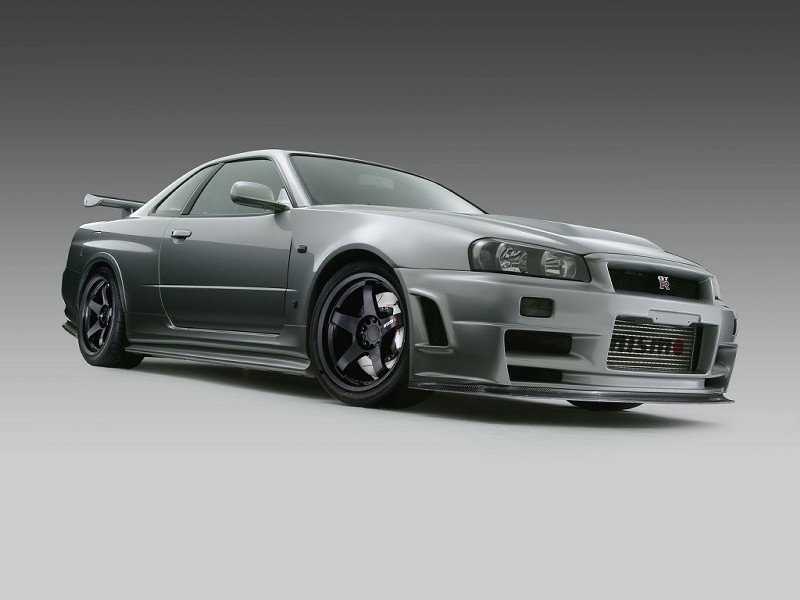
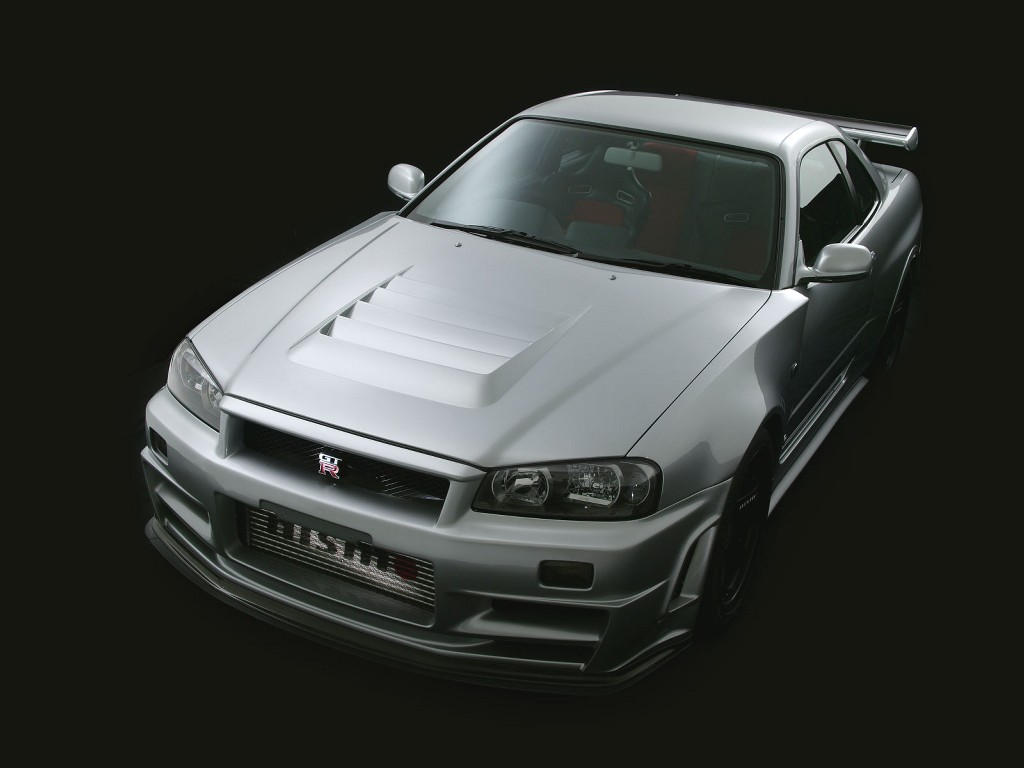
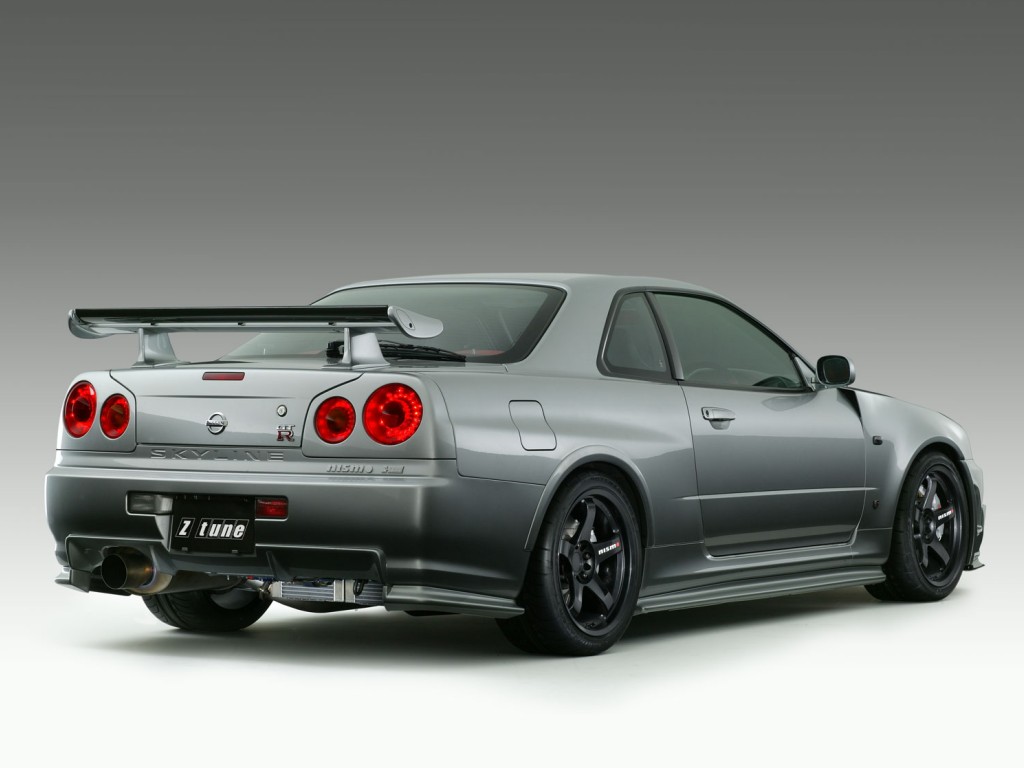
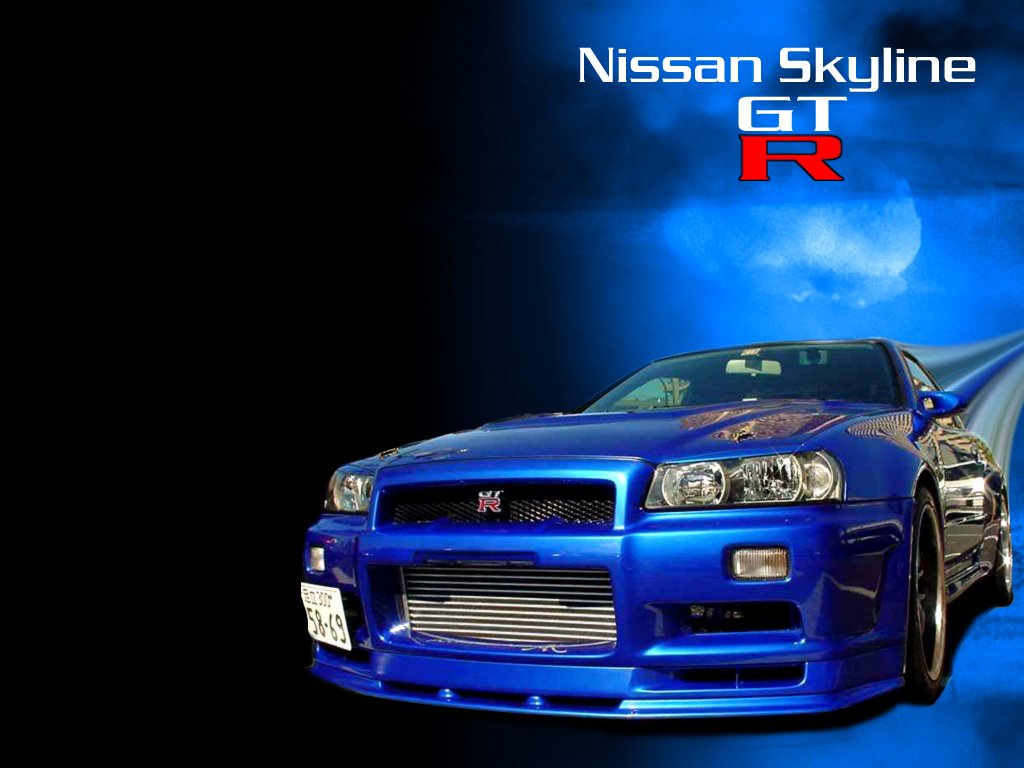
Nissan Skyline GT-R
The GT-R of the 1990s included a 2.6 L straight six-cylinder twin-turbo motor producing 206 kW (276 hp). The turbo-chargers were of a hybrid steel/ceramic design allowing them to spool up faster due to the light nature of the ceramic exhaust wheel.
Power was delivered to all four wheels using an electronically-controlled all wheel drive system referred to by Nissan as the ATTESA-ETS system. The ATTESA-ETS system uses two G-Sensors mounted underneath the centre console, which feed lateral and longitudinal inputs to the ECU. The ECU would then control the feed of power by allowing a limited amount to be delivered to the front wheels via an electronic torque split converter.
In 1995, the ATTESA-ETS Pro was introduced as an option for R33 GTR customers, and came as standard equipment in GTR V-spec models. It was later standard equipment in all GTR models for the R34 Skyline GTR. The ATTESA-ETS Pro added an Active Limited Slip Differential, which was controlled by the onboard ATTESA computer.
This was only for the rear differential, as the front differential remained as a normal Limited Slip Differential. The ATTESA-ETS Pro was also advertised in brochures as adding an electroniclly controlled 4-channel ABS brake system. Although it is not related to the all wheel drive system, it uses much of the same sensors, and the same computer.
The car also had computer-controlled all wheel steering system referred to as HICAS. The HICAS system activated when the vehicle exceeded 80 km/h and controlled the steering of the rear wheels in the same direction as the front to improve turn in on entry to corners. It should be noted however that this feature is often seen as more of a hindrance then help in race applications.
The system tends to favour less advanced drivers, and can make the rear suspension unstable during high speed cornering. For this reason many kits are available to override this system usually by looping it's hydraulic lines back on themselves. This is seen to make the car much more predictable when driving at the limit of grip.
While the published figures from Nissan were as quoted above, practical tests showed the car had a factory power output of closer to 330ps (325hp) at the flywheel. The lower published figure was Nissan's response to the need to abide by a gentleman's agreement between the Japanese auto manufacturers not to release a car to the public exceeding 280ps (276hp) of power output.
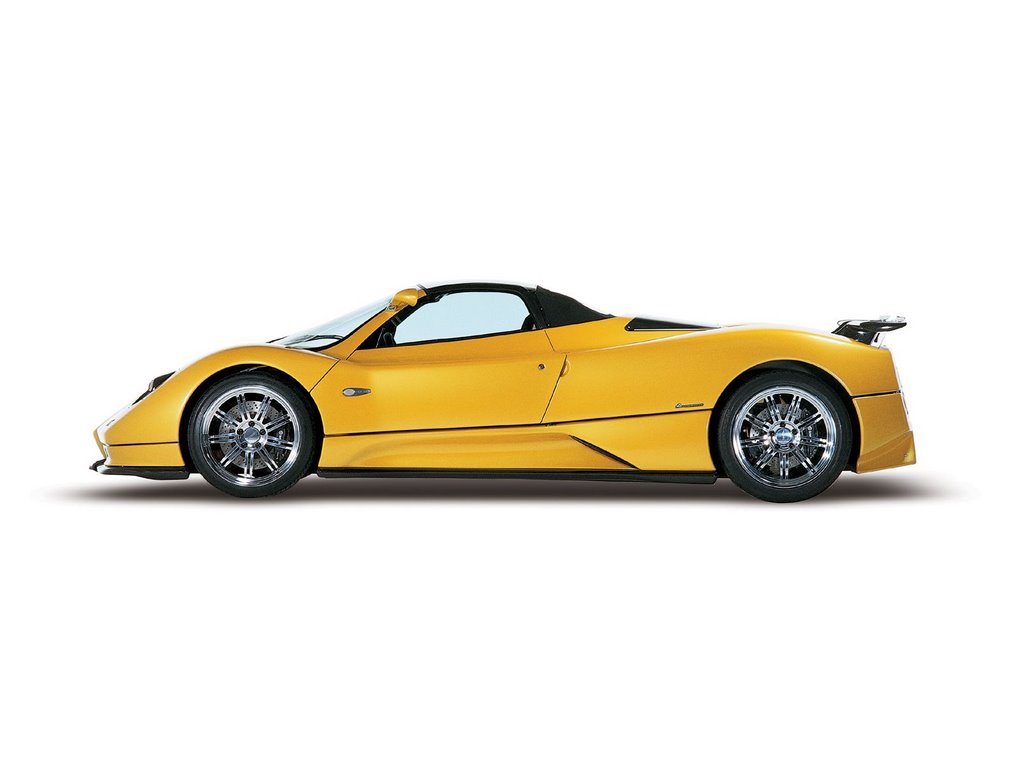
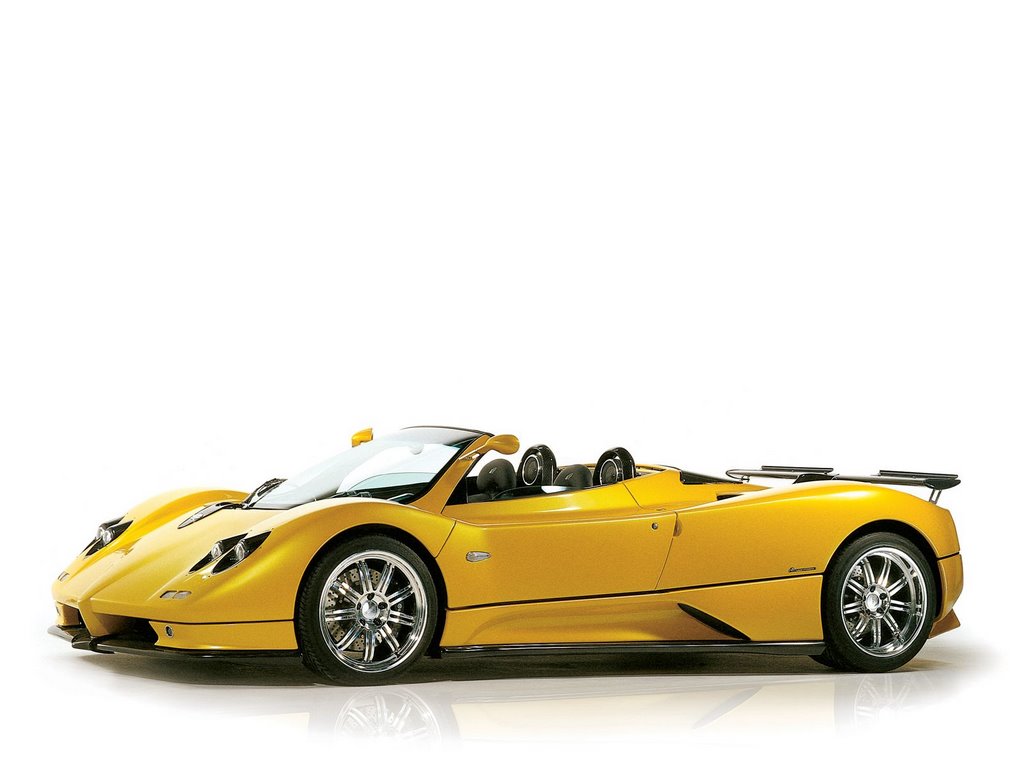
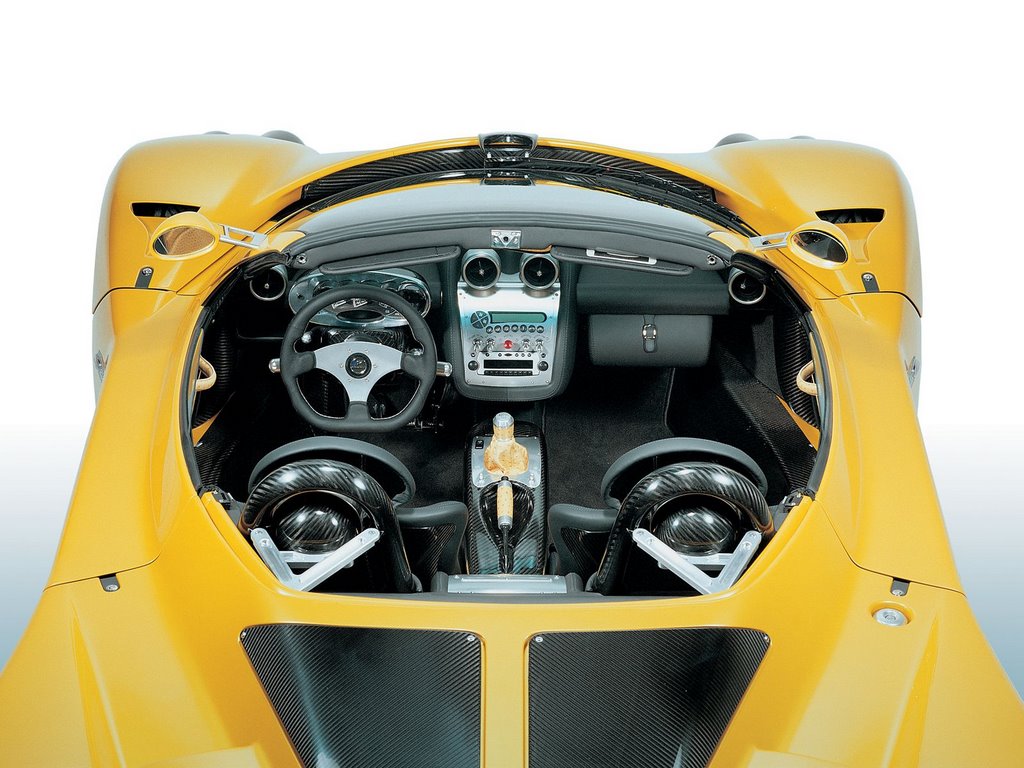
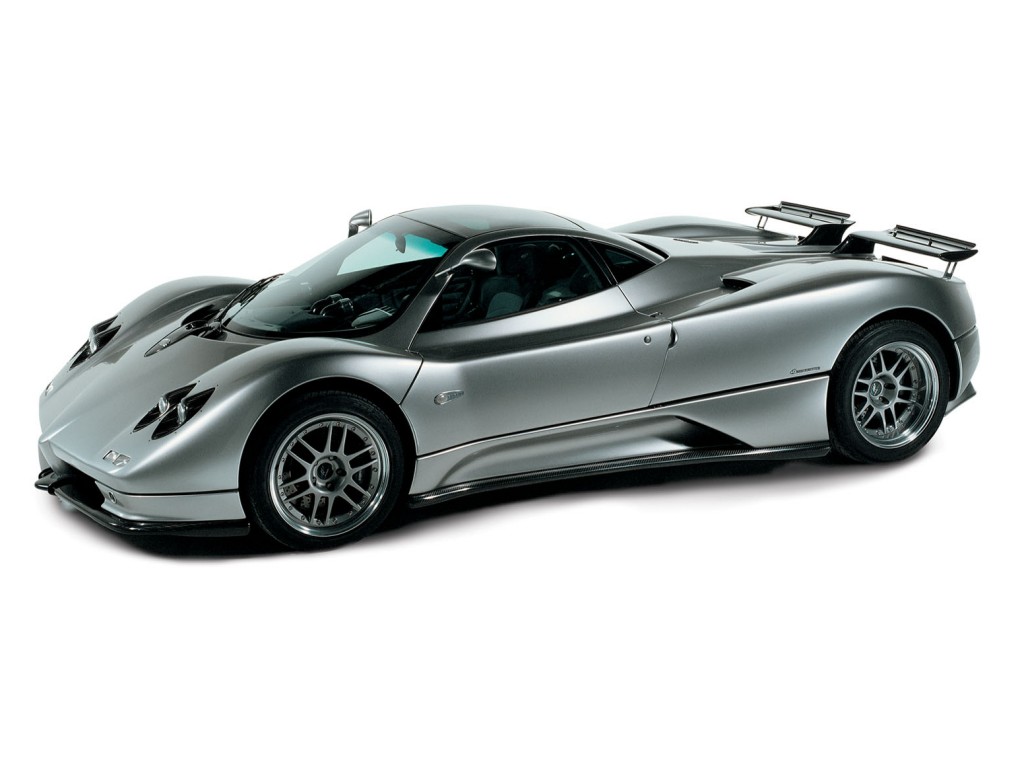
The Pagani Zonda is a supercar produced by Italian car manufacturer Pagani. It debuted in 1999 and continues through the present, with production proceeding at roughly 25 cars per year. As of December, 2005, 60 Zondas had been built. It is a mid-engined 2-seat coupe and convertible. Construction is mainly of carbon fiber.
Some early Zonda engineering was done by Formula One champion, Juan Manuel Fangio. The car was originally to be named for him, the "Fangio F1", but the name was changed upon his death in 1995.
The Zonda C12 F debuted at the 2005 Geneva Motor Show. It is the most extensive reengineering of the Pagani car yet, though it shares much with its predecessors including the 7.3 L V12. Power is increased to 602 PS (443 kW/594 hp) with a special clubsport model producing 683 PS (478 kW/685 hp).
The company promises a 3.0 second sprint to 60 mph (97 km/h, a top speed over 350 km/h (218 mph) and it will be the queen in braking from 300 km/h to 0 (186 mph to 0). The Zonda F clubsport has a power to weight ratio of 521 bhp/ton (384 W/kg) . Compare, for example, the Enzo Ferrari which has a power to weight ratio of 483 bhp/ton (356 W/kg).
Production of the Zonda F will be limited to 25 cars, still not US compatible. The next model, due to be unveiled in 2008, will be fully EPA/DOT compatible.
The Zonda F, named after F1 pilot Juan Manuel Fangio, comes with an extra head light and different fog lights at the sides, new bodywork (revised front end, new rear spoiler, more aerodynamic vents all around) that improves the cars aerodynamics and different side mirrors.
Further enhancements over the 'S' centre around optional carbon/ceramic brakes developed in conjunction with Brembo, magnesium wheels, inconel titanium exhaust system, hydroformed aluminium intake plenum and a redesigned 'Z preg' weave in the crash structure to improve rigidity and reduce weight.
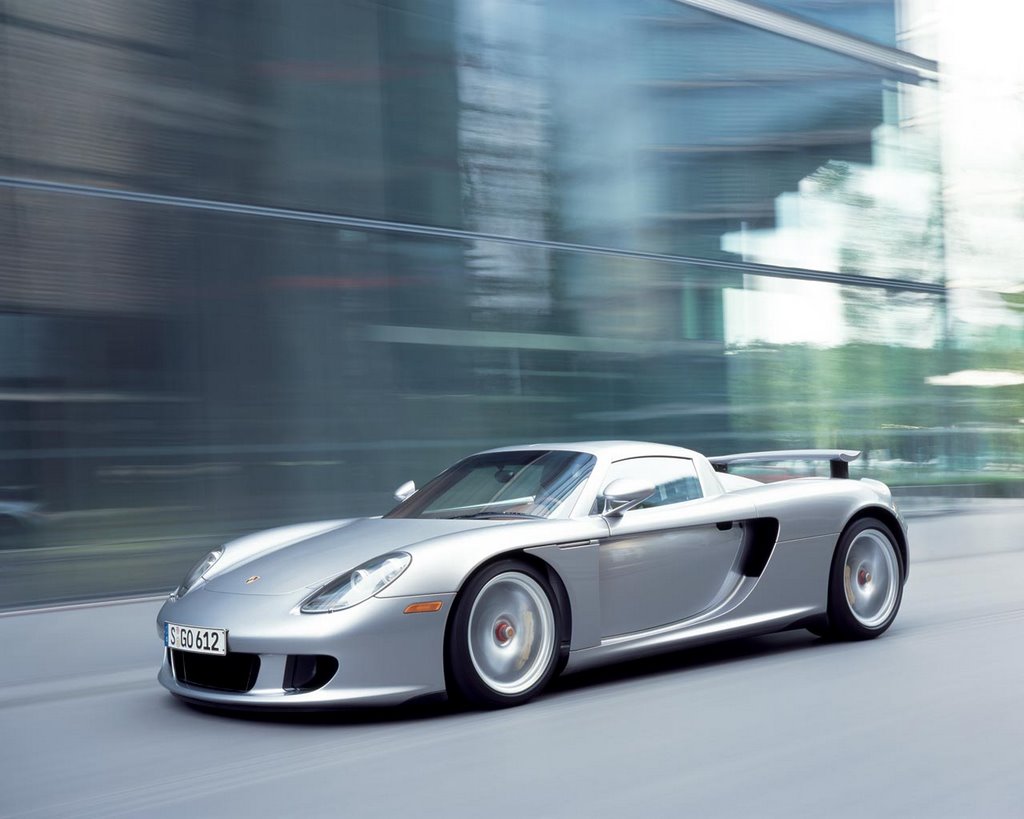
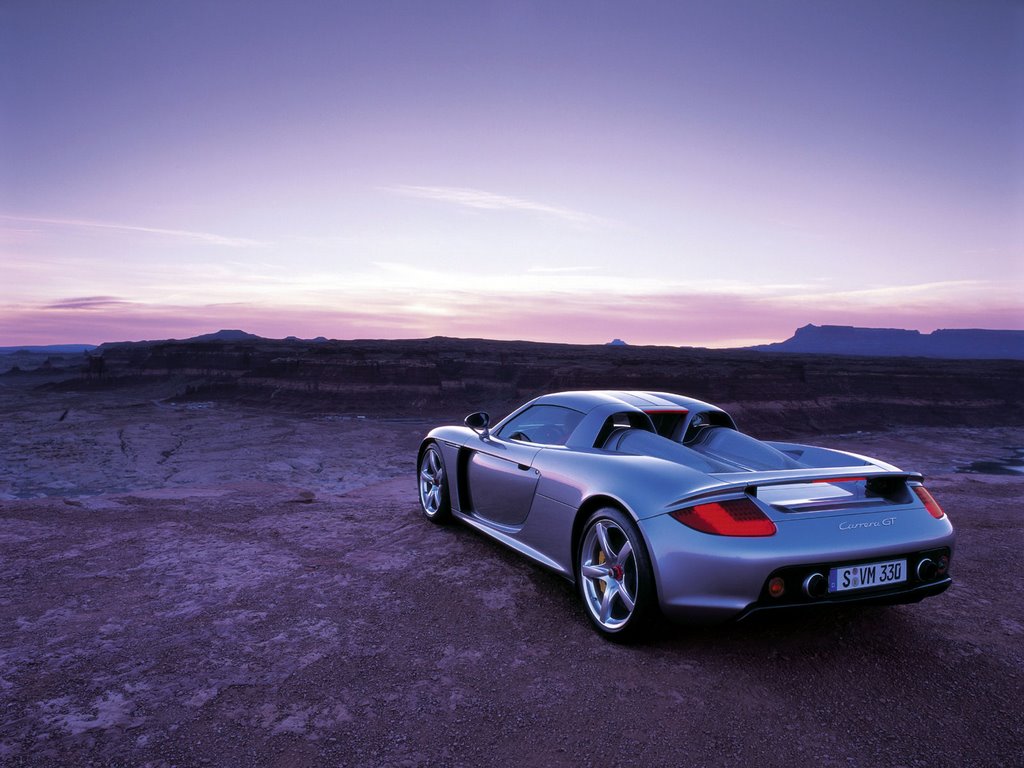
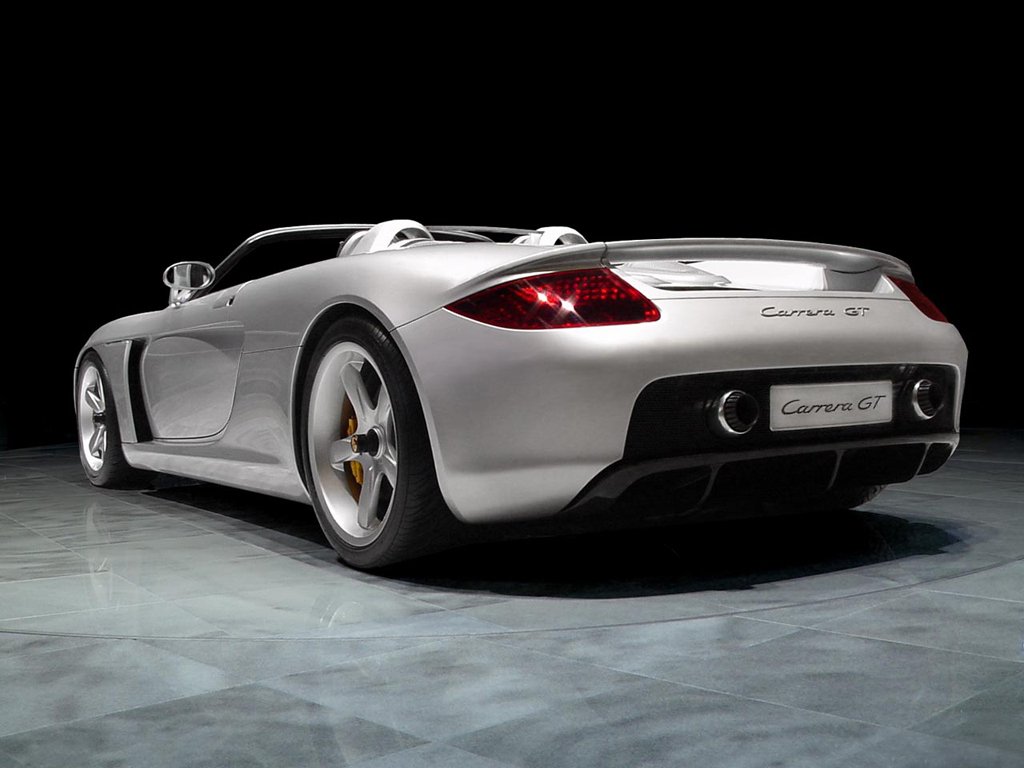
The Carrera GT is powered by an all-new 5.7 litre V10 engine producing 612 DIN (605 SAE) horsepower (450 kW) whereas the original concept car featured a 5.5 litre version rated at 558 hp (416 kW). Porsche claims it will accelerate from 0 to 100 km/h (62.5 mph) in 3.9 seconds and has a maximum speed of 330 km/h (205 mph), although road tests indicated that in reality the car could accelerate from 0-60 in under 3.5 seconds and to 0-100 in 6.8 seconds and has a top speed of 330-340 km/h (209-215.2 mph).
The Carrera GT has a basic 5 colour paint schemes which include: Black, Guards Red, Fayence Yellow, Basalt Black, GT Silver and Seal Grey. Custom colors were also available from the factory. A six-speed manual transmission is the only available transmission, in contrast to its rival the Enzo Ferrari which is only offered with sequential manual transmission.
Attached to this gearbox is a birch/ash gearknob which pays homage to the wooden gearknob used in the Porsche 917 Le Mans racers. With the Enzo Ferrari priced initially around $660,000, the Carrera GT base price of $448,400 makes the dream of owning a piece of Le Mans inspired technology somewhat more attainable. The Carrera GT is also priced at $600,000 in Canadian dollars, and at 390,000 in Euros.
The Carrera GT has large side inlets and airdams that help cool the large V-10 that lies framed by the carbon fibre rear hood. Fitted with Porsche's latest brake system, the 15 inch ceramic pad brakes make a stunning appearance underneath the 19 inch front and 20 inch rear tires. Similar to other Porsche Models, the GT includes an automated rear wing spoiler which deploys in the higher ranges of speed (70 mph).
996 Series
In 2000, Porsche launched the Turbo version of the Type 996. Like the GT3, the new Turbo engine derived from the 911 GT1 engine and, like its predecessor, featured twin-turbos and now developed 420 PS (309 kW). Also like its predecessor the new Turbo was only available with 4 wheel drive. A 17,000 USD factory option, the X50 package, was available that boosted the engine output to a tidy 450 PS with 620 N·m (457 lbf·ft) of torque across a wide section of the power band. With the X50 package in place the car could make 0–100 km/h (0-62 mph) in 3.8 seconds.
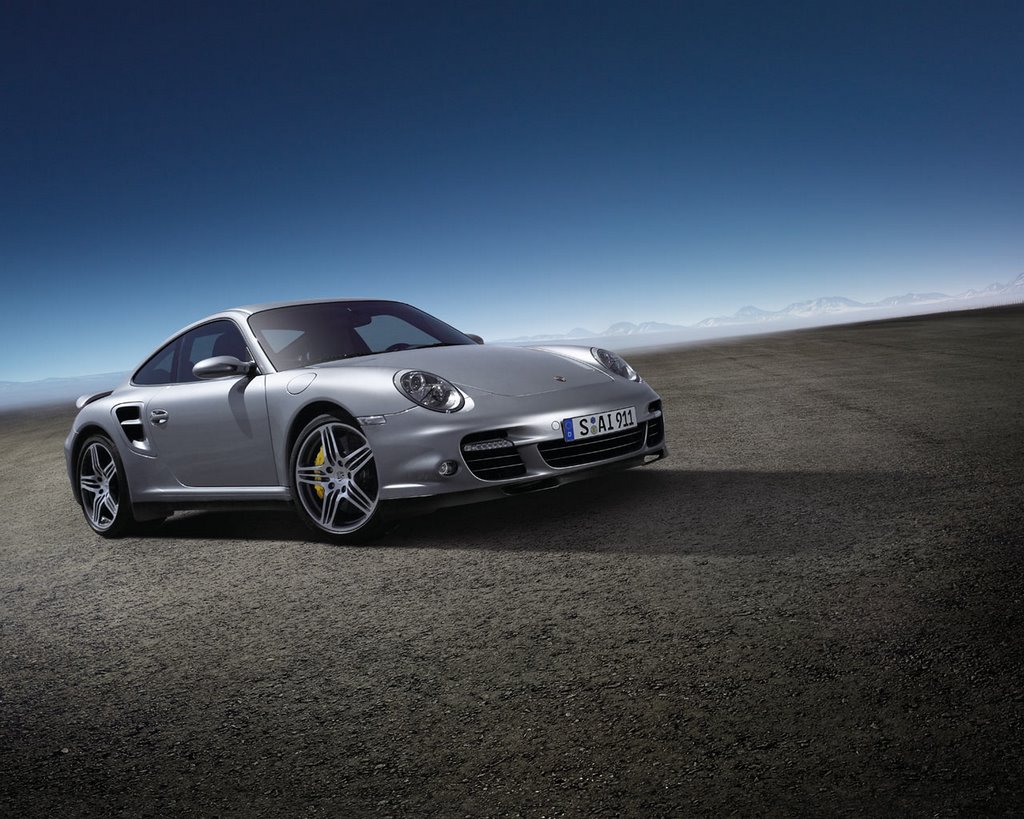
Styling wise, the car was more individual than previous Turbos. Along with the traditional wider rear wings, the 996 Turbo had different front lights and bumpers when compared to the Carrera and Carrera 4. The rear bumper had air vents that were reminiscent of those on the Porsche 959 and there were large vents on the front bumper, which have been copied on the Carrera 4S and Cayenne Turbo.
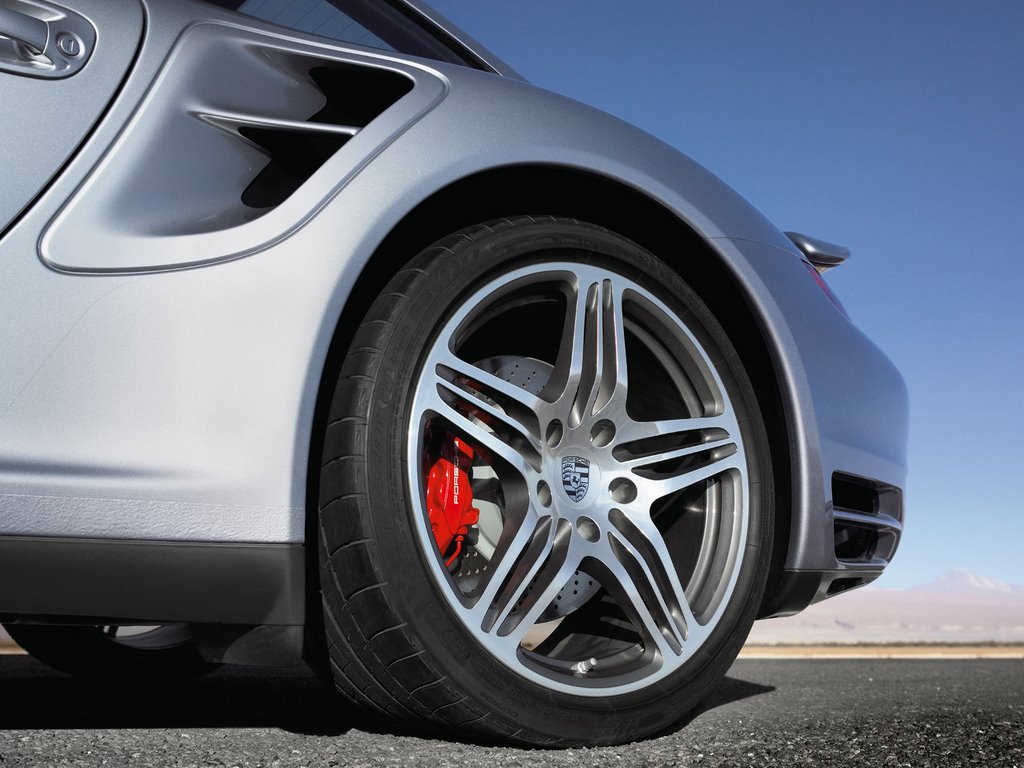
997 Turbo
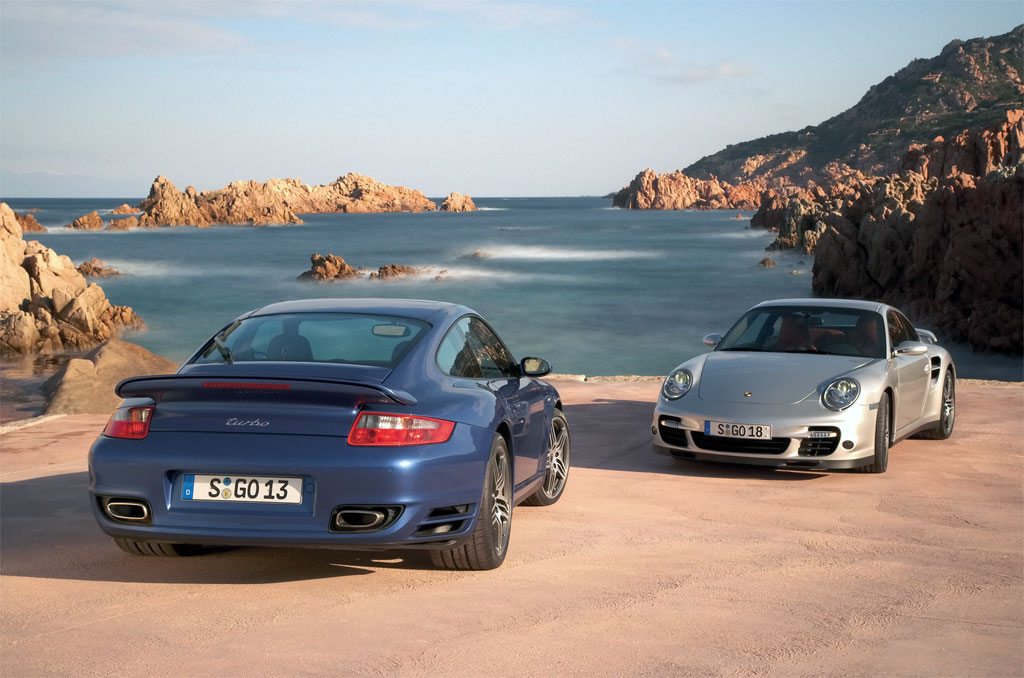
The Turbo version of the 997 series featured the same 3.6 L twin-turbocharged engine as the 996 Turbo, but this time it developed 480 PS (353 kW) and 620 N·m (457 lbf·ft) of torque. This was in part due to the 997's new variable-geometry turbocharger (a first on a petrol-engined road car) which essentially combines the low-rev boost and quick responses of a small turbocharger with the high-rev power of a larger turbocharger.
As well as producing more power and flexibility, the new turbocharger improved fuel consumption over the 996 Turbo. With these performance upgrades, it accelerates to 100 km/h (62mph) in 3.9 seconds (3.7 with the Tiptronic transmission) and reaches a top speed of 310 km/h (193 mph). The optional Sports Chrono overboost package increases torque to 680 Nm (505 lbf.ft) for short periods (maximum 10 seconds) but over a narrower rev range.
The 997 Turbo features a new 4-wheel-drive system, similar to the one found on the Porsche Cayenne. Featuring PTM (Porsche Traction Management) the new system incorporates a clutch-based system which varies the amount of torque to the front wheels, regardless of wheel slip front and rear.
This, according to Porsche, aids traction and the handling by redirecting the torque to control oversteer or understeer, thus resulting in far more neutral handling, as well as greatly improved performance in all weather conditions (as opposed to older 4WD system which gave the Turbo stability under hard acceleration).
Styling wise, as with the 996 Turbo the car featured more unique styling cues over the Carreras, one of the more distinctive elements the front LED driving/parking/indicator lights mounted on a horizontal bar across the air intakes.
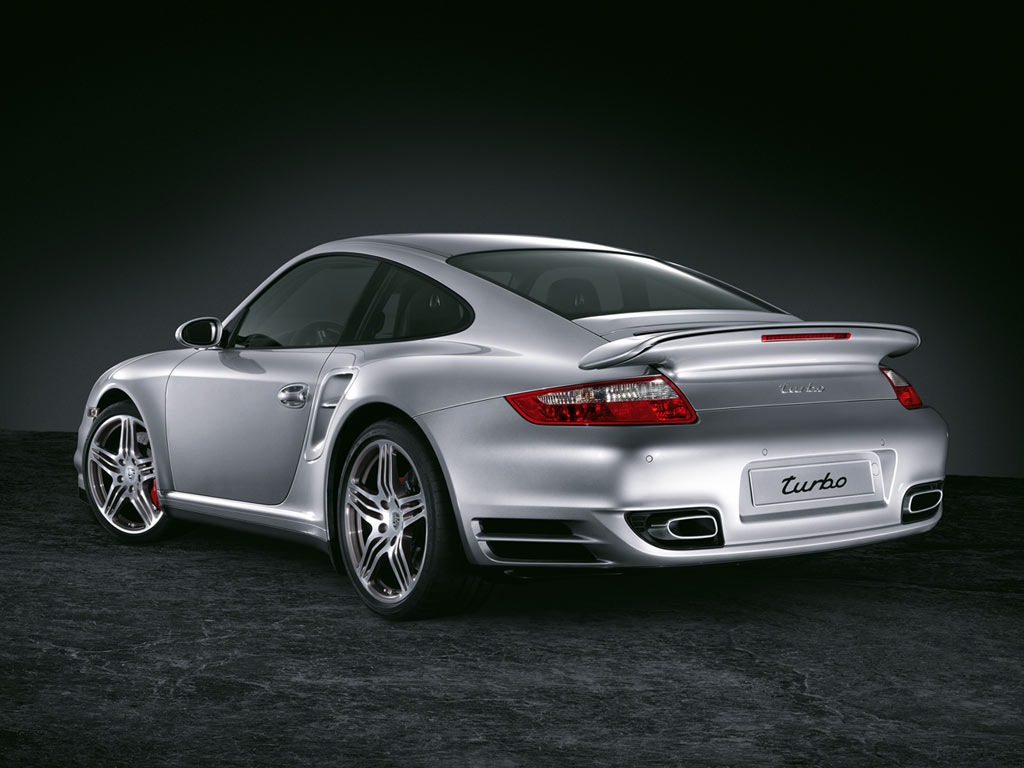
The traditional rear wing is a variation of the 996 bi-plane unit.The Turbo version of the 997 series featured the same 3.6 L twin-turbocharged engine as the 996 Turbo, but this time it developed 480 PS (353 kW) and 620 N·m (457 lbf·ft) of torque.
This was in part due to the 997's new variable-geometry turbocharger (a first on a petrol-engined road car) which essentially combines the low-rev boost and quick responses of a small turbocharger with the high-rev power of a larger turbocharger. As well as producing more power and flexibility, the new turbocharger improved fuel consumption over the 996 Turbo.
With these performance upgrades, it accelerates to 100 km/h (62mph) in 3.9 seconds (3.7 with the Tiptronic transmission) and reaches a top speed of 310 km/h (193 mph). The optional Sports Chrono overboost package increases torque to 680 Nm (505 lbf.ft) for short periods (maximum 10 seconds) but over a narrower rev range.
The 997 Turbo features a new 4-wheel-drive system, similar to the one found on the Porsche Cayenne. Featuring PTM (Porsche Traction Management) the new system incorporates a clutch-based system which varies the amount of torque to the front wheels, regardless of wheel slip front and rear.
This, according to Porsche, aids traction and the handling by redirecting the torque to control oversteer or understeer, thus resulting in far more neutral handling, as well as greatly improved performance in all weather conditions (as opposed to older 4WD system which gave the Turbo stability under hard acceleration).
Styling wise, as with the 996 Turbo the car featured more unique styling cues over the Carreras, one of the more distinctive elements the front LED driving/parking/indicator lights mounted on a horizontal bar across the air intakes. The traditional rear wing is a variation of the 996 bi-plane unit.